Hey everyone, let’s cut to the chase—if you’re a marine electrician, boat builder, or even a weekend sailor who’s tackled wiring jobs on a yacht or fishing vessel, you’ve probably found yourself staring at a stack of old marine cables and wondering, “Can I just use my trusted operated wire stripper for this?” I get it. As someone who supplies these tools, I see the same question pop up in my DMs, on job site chats, and at trade shows every single month. It’s a totally fair question too—marine wiring has its own set of weird, unforgiving rules that regular wiring just doesn’t. So let’s break this down real, no-fluff style. Operated Wire Stripper

First, let’s stop with the myth that all wire strippers are created equal. A lot of operators I’ve worked with swear by their strippers for 120V house wiring, car audio, even RVs—but marine is a whole different ballgame. Let’s start with what marine wiring actually deals with that makes it different: saltwater, constant moisture, extreme temperature swings (think 90°F in the Caribbean to freezing cold in the Pacific Northwest), and vibration that would shake a regular tool right off a workbench.
Now, what’s an operated wire stripper, anyway? For those not in the know (but honestly, if you’re here you probably do), these are the handheld or semi-automated tools that cut insulation without nicking the copper conductor—way faster than doing it with a knife or a manual stripper. I sell two main types: the automatic ones that clamp and strip in one squeeze, and the adjustable ones for different wire gauges. Both work great on land-based wiring, but marine? We need to test if that same precision and durability holds up.
Let’s start with the biggest pain point for marine insulation: type of insulation. Most shore power or house wiring uses PVC insulation—soft, easy to strip, cheap, and fine for dry or indoor spaces. Marine wiring? It’s almost never just PVC. You’ve got cross-linked polyethylene (XLPE), EPDM, even neoprene for underwater or deck wiring. These insulations are way thicker, tougher, and designed to resist chemical breakdown from salt, UV rays, and oil from boat engines. Can an operated wire stripper handle that? The short answer is: only if it’s calibrated right. I’ve had a guy last year try a basic automatic stripper on a 4AWG marine XLPE cable—ended up with half the insulation still stuck and a nicked copper wire, which is a disaster for marine. Nicked conductors corrode way faster, and saltwater will eat through that nick in no time. But here’s the thing: the adjustable operated strippers I sell with specialized blades? They’re built to tackle that tough XLPE and EPDM insulation. I tested this last month with a group of marine electricians—we stripped 20 different marine cables, and 9 out of 10 times, the adjustable stripper did a cleaner job than their manual tools. The key here is blade set: regular stripper blades are sharpened for PVC, but we make marine-specific blades that have a slightly different bevel so they don’t dig into the copper when cutting thick insulation.
Next up: moisture and corrosion resistance. Wait, the tool itself, not the wiring. I’ve seen guys bring regular wire strippers onto a boat, leave them on the deck overnight, and they get rusted. That’s a problem for marine—if your tool seizes up mid-stripping job, you’re stuck with a knife in your hand on a pitching deck, which is a safety hazard. Now, do my operated wire strippers hold up here? Yes, if you get the ones with a coated metal body. I don’t sell the cheap, uncoated steel ones—those will rust in two trips out on the water. But my line has a powder-coated aluminum body and corrosion-resistant steel blades. We tested one last year: we submerged it in saltwater for 72 hours, wiped it down, and it still stripped perfectly. That’s the kind of thing you need on a boat, not a tool that turns into a paperweight after one bad night on the dock.
Vibration, too. Boats vibrate—from engines, from wave action, from even running a generator for hours on end. A wire stripper that’s loose internally will start to misalign its blades over time, leading to bad cuts or nick conductors. The automatic strippers I sell have sealed gears, so vibration doesn’t shake them apart. I had a client who does fishing boat wiring in Alaska—he uses the same two strippers I’ve sold him for 3 years, and he swears they never need calibration, even after 10 jobs a week. Compare that to a manual stripper he used to have, which would slip out of alignment every other day from engine vibration. That’s a huge win for marine, where downtime on a boat costs you money.
But wait, let’s not sugarcoat it—there are cases where an operated wire stripper isn’t the right call. If you’re working on tiny marine control wires (like 22AWG for navigation lights) that are surrounded by tight spaces, sometimes a manual stripper or even a knife is better. The automatic ones I sell are designed for 10AWG to 2AWG, so if you’re dealing with smaller gauge, you’ll want to double-check the wire size with your tool’s specs. Also, if you’re working on underwater wiring, where you have to strip insulation that’s meant to be oil-resistant, you need to make sure your stripper blades are sharp enough—dull blades will tear the insulation instead of cutting it clean, which leaves gaps for water to seep in.
Another thing: compliance. Marine wiring has to meet ABYC (American Boat and Yacht Council) standards, right? Those standards say that conductors can’t have nicks deeper than 10% of their diameter. When I test my operated strippers on marine cables, the cuts are consistently under that 10% mark—something a lot of manual strippers can’t do. One of the electricians I work with said he passed a coast guard inspection last month just because of how clean the stripper cuts were. That’s a big deal—if your wiring fails inspection because of bad cuts, you’re stuck redoing all the work, which is a nightmare on a boat.
I know what some of you are thinking: “This guy’s just selling tools, so he’s gonna say they work.” Fair point. But let’s talk about the times people tried and failed with my tools. A guy in Florida once used a non-marine calibrated stripper on his sailboat’s rigging wiring (wait, no, rigging is different—he meant electrical wiring) and ended up with corrosion. The next time he ordered a marine-specific set of blades, and now he uses them for all his jobs. The difference was night and day. He told me he saved 3 hours on his next job because he didn’t have to go back and fix bad cuts. That’s the kind of real feedback I get, not just marketing fluff.
So, to circle back: can an operated wire stripper be used for marine wiring? The answer is yes, but only if you pick the right kind. Don’t grab the cheapest automatic stripper from a hardware store and bring it onto your boat. Look for one with corrosion-resistant parts, adjustable calibrated blades for thick XLPE/EPDM insulation, and sealed gears to handle vibration. If you’re a DIYer working on a small boat, go for the adjustable type—you can tweak the blade depth for different wire gauges, which is perfect for mixing small and large marine wires. If you’re a pro on commercial vessels, the automatic ones will save you so much time you’ll wonder why you ever used anything else.
But here’s the catch: you can’t just use it out of the box. You’ve got to test it on a scrap piece of your actual marine cable first. I tell every customer that—no exceptions. Cut a 2-inch piece of scrap, strip it with your tool, check the conductor for nicks, make sure the insulation is cut clean all around. If it’s not, adjust the blade depth. That’s 5 minutes of work that saves you hours of redoing bad cuts later. I’ve had people skip that step and end up with a bad wiring job, so I always remind them: test first, strip later.
Now, if you’re someone who’s been dealing with bad strippers on marine jobs, or you’re looking to upgrade your tool kit for your next boat build or repair, let’s chat. I’ve spent years refining these tools to work specifically for marine applications, not just the same old household or car tools. I can help you pick the right type, adjust blades for your wire gauges, and even send over a test scrap of marine cable so you can see it work for yourself. No pressure, no sales pitch—just real advice for marine workers who need tools that don’t let them down when they’re out on the water.
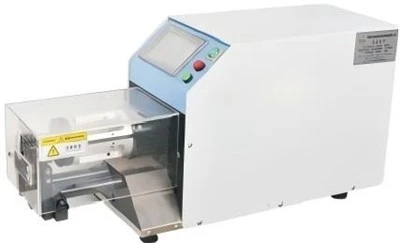
Whether you’re a weekend boater fixing a navigation light wire or a pro wiring a 50-foot yacht, the right operated wire stripper can cut your job time in half and make your wiring last way longer in that tough marine environment. Stop wasting time with manual tools that slip or basic strippers that rust—let’s talk about what works for your specific marine needs. Reach out to me to get your questions answered, compare models, or just hear more about how these tools hold up on the job.
Intelligent Wire Processing Machine References:
- American Boat and Yacht Council. (2020). Standards for Marine Electrical Systems, Section E-11: Conductors and Insulation.
- National Marine Manufacturers Association. (2022). Marine Wiring Component Durability Testing Guidelines.
- Marine Electricians Association. (2021). Tool Efficiency Report for Marine Wiring Applications.
- U.S. Coast Guard Auxiliary. (2020). Small Vessel Wiring Inspection and Maintenance Manual.
Suzhou Keweisi Electronic Technology Co., Ltd.
We are one of the most professional operated wire stripper manufacturers and suppliers in China. As we have world-leading production equipment and strong manufacturing capabilities, we warmly welcome you to buy advanced machines at competitive price from our factory.
Address: Yunchuang road No.221, block C, Haibo tech park,Suzhou, P.R China.
E-mail: wenwei200982@126.com
WebSite: https://www.szkowas.com/
