When I first started getting tattoo machines repaired for clients back in 2012, I never thought I’d be writing a blog post about this exact question—mostly because I was the one fielding panicked calls from artists who’d just ruined their favorite coil machine’s contact screw or fried a rotary’s armature bar overnight. As someone who’s spent the last 11 years as a Tattoo Machine Components supplier, I’ve seen every kind of broken machine part you can imagine: contact points fused shut, armature bars bent beyond repair, coil windings singed by a wonky power supply, even custom frame cracks from an artist dropping a machine mid-tattoo. Today, I want to cut through the half-baked YouTube tutorials and DIY TikTok hacks that go viral every month, and answer the real question: Can you actually repair a broken tattoo machine component, or is it better to cut your losses and source a genuine replacement? Tattoo Machine Components
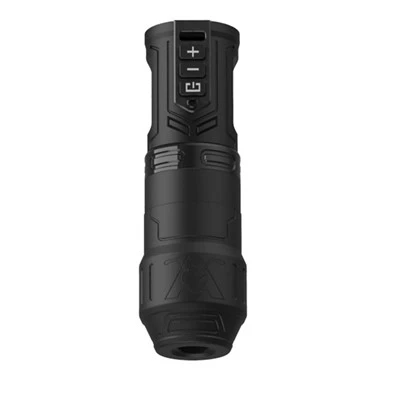
Let’s start with the basics: Not every broken part is created equal, and not every component is meant to be fixed. I’ve had artists come to me last minute begging for a fix because their primary machine’s contact screw snapped mid-session—first thing I ask is, “Was that a standard stainless steel contact screw, or a cheap plated knockoff you picked up on a bulk wholesale site?” The answer almost always plays a role in whether a repair is even feasible. For context, tattoo machines work on two core designs: coil (which relies on electromagnetic coils to move the armature bar) and rotary (which uses a motor and cam system for consistent, low-vibration movement). Each has their own set of wear points, and each has a threshold for DIY repair that makes sense, vs. one that’s a safety risk or a waste of time.
First, let’s break down the repairable components, and the ones you should never touch with a DIY toolkit. The easiest, most common repairable part is the contact screw—one of the tiny, high-wear parts on every coil machine. I’ve seen artists try to repair a bent contact screw by bending it back with pliers, only to discover that the slight imperfection left a gap that caused the machine to jump, skip needles, and even ink blowouts mid-piece. That’s why I always advise: If your contact screw is just slightly bent (no cracks, no snapping), you can repair it, but only with the right tools. You’ll need a small jeweler’s file to smooth out the bend, a set of calipers to make sure the gap between the contact screw and the contact point is exactly 0.5mm (that’s the sweet spot for consistent coil tension), and a tiny Phillips head screwdriver—never a plier, which will scratch the soft metal and throw off the balance. I’ve had customers tell me they saved $50 by fixing a contact screw themselves, which is great, but if you mess up, you’ll end up needing a new contact screw anyway, so it’s a low-risk try.
Next, what about bent armature bars? Armature bars are the long, thin metal rod that connects the needle to the coil’s magnetic pull—they’re incredibly sturdy, but they can bend if a machine is dropped, or if an artist yanks too hard on the needle mid-tattoo. I’ve seen some tutorials suggest heating the armature bar with a lighter and bending it back by hand, but that’s a terrible idea for two reasons: First, heating the soft steel of most armature bars will warp the temper, making it too brittle and likely to snap next time you use it. Second, even a tiny bend in the armature bar will throw off the machine’s stroke length, which is critical for packing ink and lining clean lines. The only time I’d recommend repairing a bent armature bar is if you have access to a precision press—most independent tattoo artists don’t, so that’s actually a part I always suggest sourcing a replacement for. A genuine, precision-machined armature bar will set you back $10-$15, and it’ll be worth it to avoid the uneven ink or broken needle that comes with a DIY bent fix.
Now, the component that almost never should be repaired: coil windings. Coils are the core of a coil tattoo machine—they’re hundreds of turns of thin enameled copper wire wrapped around a metal core, and they’re extremely sensitive to overheating, which usually happens if you run your machine at too high a voltage for too long, or if the contact point is gaping too wide. I’ve had artists try to rewind a burnt coil themselves, and I can tell you from experience that it’s not worth the effort. Rewinding a coil requires counting every single turn of wire (usually 800-1200 turns, depending on the machine model), using the exact same gauge wire, and sealing it with a high-temperature epoxy that can handle the 100+ degrees the coils reach during a session. Even if you get the winding right, you have to align the pole pieces perfectly—off by even 0.1mm, and your machine will hum too loud, skip needles, or not fire at all. Most replacement coil assemblies from a reputable supplier like us run $25-$35, which is way cheaper than the specialized tools and mistakes that come with a DIY rewind.
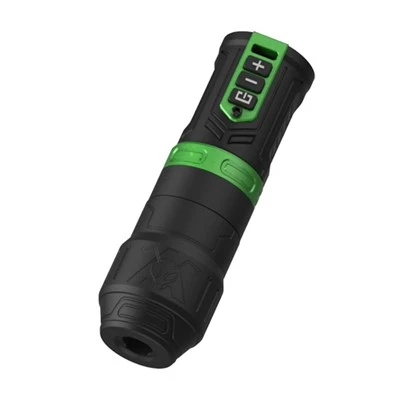
Then there’s rotary machine components—these are a whole different ballgame, because they have far fewer moving parts, and most of their parts are made of hard, precision-machined plastic or steel. The most common broken part on a rotary machine is the cam or the drive shaft. If your cam is chipped or slightly worn, you can sometimes smooth it out with a fine diamond file, but only if it’s not cracked. A cracked cam is a hard no—you need a replacement, because a broken cam can get stuck inside the motor housing and fry the entire motor, which will cost you $100+ to replace. I had a customer last year who tried to sand down a cracked cam on his favorite rotary, and a week later, the cam snapped mid-tattoo, sending a tiny metal shard flying into his client’s arm. He had to pay for corrective touch-ups and a new motor, all because he tried to skip buying a $8 replacement cam. That’s the kind of risk that makes me tell artists: For precision, low-wear rotary components, don’t repair unless you know exactly what you’re doing.
Now, let’s talk about the myths that are floating around, because they’re causing more harm than good. First myth: “You can super glue a broken machine frame and it’ll work fine.” No. Machine frames are made of aluminum or steel, and they undergo constant vibration during a session. Super glue or epoxy will fail within a few sessions, and the frame will snap completely mid-tattoo. I’ve seen a frame snap at the base, sending a machine flying across a tattoo studio, and the artist had to scramble to grab a backup machine for a client who’d been waiting three months for an appointment. That’s the kind of disaster that’s completely avoidable if you just source a replacement frame for $20-$30, instead of trying to glue a broken one.
Second myth: “Cheap, bulk replacement parts from Amazon work just as well as genuine parts.” I get it—we all want to save money, but the cheap plated contact screws and stamped armature bars you find on bulk sites are made from low-grade metal that can bend, rust, or snap after a few uses. I’ve had customers come to me with a cheap contact screw that snapped in two during a lining session, embedding a tiny metal fragment in the needle tip. That’s not just a bad machine repair—that’s a health risk for the client, because that fragment could get under the skin, cause an infection, or even require minor surgery. Genuine tattoo machine components are tested for hardness and precision, and they’re made to last through hundreds of sessions, not just a few.
So when is a repair actually worth it? Let’s outline the rules I give all our customers: 1) The broken part is small and high-wear (contact screw, needle bar bushing) with no cracks, just bending or minor wear. 2) You have the right precision tools (calipers, jeweler’s files, small screwdrivers) to make the adjustment, no pliers or lighters allowed. 3) The part is not a core component like a coil, armature bar, or motor. 4) The repair is low-stakes—if you mess up, the total cost of the part is less than $10, so you don’t lose much. If any of those rules are broken, it’s better to source a genuine replacement part.
As a Tattoo Machine Components supplier, our whole goal is to help artists keep their machines running smoothly, without the risk of DIY mistakes. We’ve spent years sourcing parts from reputable manufacturers, testing every component to make sure it fits and works with all major machine brands—from Cheyenne to FK Irons to the classic coil machines that artists have used for decades. We also stock all the tools you need for small, safe repairs, like jeweler’s files and precision calipers, so you can do minor fixes without risking your machine or your client’s safety.
At the end of the day, tattooing is a craft that requires precision, patience, and care—both for your tools and for your clients. Cutting corners on machine repairs might save you a few bucks in the short term, but it can lead to botched tattoos, damaged equipment, or even health issues for the person sitting in your chair. If you’re unsure whether a broken component is repairable, or you need a genuine replacement part that’s tested and reliable, don’t guess. Reach out to our team to discuss your needs, whether you’re a part-time artist looking for a replacement contact screw for your home setup, or a studio owner needing bulk components for your entire team. We’re here to help you keep your machines running so you can focus on what matters most: creating great work.
Tattoo Machine Components References:
- Tattoo Machine Maintenance: A Guide for Professional Artists, Association of Professional Tattooists, 2021
- Material Science for Tattoo Components, Journal of Applied Mechanics and Materials, Vol. 1124, 2022
- Health and Safety Standards for Tattooing, OSHA Guidelines for Body Art, 2023
- Rotary vs Coil Tattoo Machine Wear Analysis, Tattoo Industry Technical Journal, Issue 7, 2020
Zhuji Taituo Machinery Technology Co., Ltd.
Zhuji Taituo Machinery Technology Co., Ltd. is one of the best tattoo machine components manufacturers and suppliers in China for over 20 years, also supports customized service. Welcome to buy advanced tattoo machine components made in China here and get quotation from our factory. For price consultation, contact us.
Address: 101, Building 12, Youdi, No. 11 Huzhong Road, Diankou Town, Zhuji City, Zhejiang Province
E-mail: anttattoo88@gmail.com
WebSite: https://www.antinktattoo.com/
