Hey everyone, Mobile Stage Truck
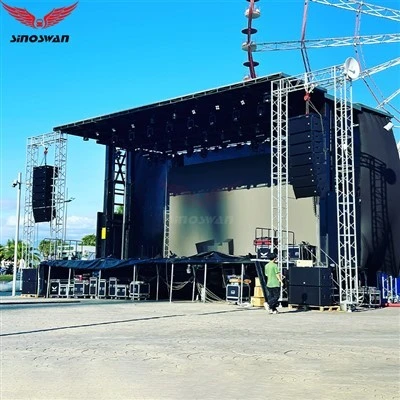
Let me cut to the chase. For the past seven years, I’ve been running a small but steady mobile stage truck supply business—nothing fancy, no big corporate backing, just me, a team of three hands-on mechanics, and a gut feeling that event organizers were sleeping on what these rigs could actually do. I can’t tell you how many times I’ve had a festival coordinator call me panicking because their 20-foot trailer stage got stuck in mud at a last-minute pop-up market, or a high school prom planner cry because their gym’s speaker system died mid-dance and they couldn’t haul a replacement in time. That’s why selling these trucks isn’t just moving metal and hydraulics—for me, it’s matching a rig to a problem, and making the person buying it feel like they’re not just dropping a chunk of change on a vehicle, they’re investing in their event’s reputation.
If you’re new to this game, or if you’ve been spinning your wheels trying to move more units, let’s talk about what actually works when selling a mobile stage truck. A lot of suppliers I see online spout specs like “16ft retractable stage” or “5000lb lifting capacity” and call that a sales pitch. No one cares about specs until you tell them how those specs fix their specific headache. Let’s break this down the way I’ve learned to do it, one step at a time, with real stories to back it up.
First, stop selling to every event organizer out there. Early on, I tried marketing to everyone—small wedding planners, large outdoor concert promoters, local church groups, even a kid who wanted a stage for his neighborhood lemonade stand battle of the bands. I wasted money on flyers that went to people who needed a $500 folding table, not a $30k truck. Now, I niche down. My core customers are three groups, and I don’t deviate: regional event production companies, municipal parks and recreation departments, and small to mid-sized festival organizers who do 10 or more events a year. Why? Because these are the people who can write a check (or get a grant) for a rig that lasts 10+ years, and who will use it enough to make that investment pay off.
I learned this the hard way. Two years ago, a wedding planner asked for a quote on a 20ft mobile stage truck for a single wedding. I quoted her, she hemmed and hawed, and when I followed up a week later, she told me she’d rented a trailer for $800 instead. She didn’t need to own a truck—she only needed it once. So now, I still hear those requests, but I don’t waste time. I send them a list of trusted rental companies in their area, and I note that they’re not a good fit for purchasing. That frees me up to focus on the people who actually need to own: the production company that does 20 regional fairs a year, the parks department that hosts weekly concerts in the summer, the festival organizer who needs a stage that can move 10 times between different fields and parking lots in a season.
Next, build your pitch around their pain points, not your product. Let’s take municipal parks and rec teams, for example. Their biggest headaches? Budget constraints, setup time, and liability. If a park rec director calls and asks about a truck, I don’t start with “this truck has a 22ft stage.” I start with: “Last year, the city of Maplewood had to pull $12k from their arts budget to fix a stage that got stuck in the rain during their Fourth of July concert—you know, the one where half the performers bailed because the ground was too slippery to set up. This rig has 4×4 off-road capability, so you don’t have to worry about soft fields, and the stage locks into place in 20 minutes, so you don’t have to pay three extra crew members to haul and build a temporary stage. Also, it’s fully insured against on-site damage, so your city doesn’t have to take on extra liability for rental gear.” That’s the stuff that sticks, not the spec sheet.
For festival organizers, their pain points are speed and reliability. I once had a festival promoter tell me he lost $40k in one weekend because his portable stage collapsed 10 minutes before the headliner went on. He’d rented three different stages that summer, each with their own set of issues: late deliveries, broken hydraulics, crews that showed up with half the tools they needed. When I met with him, I didn’t talk about how the stage looks good for photos. I talked about how our trucks have a dedicated, in-house setup crew that comes with every delivery, so he doesn’t have to coordinate with three different vendors. I told him that in three years of selling these trucks, I’ve never had a hydraulic failure on setup day—because we test every single truck for 2 hours straight before it leaves our lot. That’s the difference between “a truck” and “a truck that keeps you from losing your festival.”
Once you’ve got the right audience and the right pitch, let’s talk about proving value before they buy. A lot of suppliers will send a spec sheet and a price, and wait for a call. I do something different: I give them a low-risk trial. Wait, I know what you’re thinking—“why would I let someone test a $30k truck for free?” Because I don’t let them take it off my lot. I bring the truck to their current event, set it up for them, and let them run it for a few hours, with my mechanic there to handle any issues. Last year, a production company in Ohio told me they’d never owned a mobile stage because they thought they couldn’t handle the maintenance. I brought a truck to their spring concert series, walked their crew through basic checks (oil levels, hydraulic fluid, tire pressure), and let them run a night event on their own. By the end of the night, their crew was texting me pictures of the band playing, and they placed an order the next week. That trial cost me a day of labor and a few gallons of gas, but it landed a $28k sale. Not bad.
Another way to prove value: show them the numbers. No one wants to hear that “mobile stage trucks pay for themselves” in generalities. Give them specific examples. For a small festival that does 15 events a year, each with an average of 200 attendees, the revenue from ticket sales is $15k per event. If they rent a portable stage for $1,500 per event, that’s $22.5k a year in rentals. Our trucks cost around $30k, and with annual maintenance of $1,200, they’ll pay for themselves in about 18 months. For a municipal parks department, the savings are on liability: temporary stages usually have a $1 million liability fee built into the rental, while our trucks have $5 million in built-in coverage, so that’s $8k a year they can reallocate to programming instead of insurance. Numbers don’t lie, and they’re way more persuasive than any fancy brochure.
Now, address the elephant in the room: price. Mobile stage trucks aren’t cheap. I get it—even the most basic model is $25k, and custom builds can go up to $60k or more. A lot of customers will walk away at first because they think it’s too much. That’s why you need to have flexible financing options, but not the generic “we work with lenders” stuff. I partner with a local equipment financing company that specializes in small businesses and municipal grants. So when a parks director says “our budget is only $50k,” I can tell them: “We can structure a lease-to-own plan for $800 a month, which is less than you’d spend on temporary stage rentals in two months. And we can help you put together a grant application that covers 75% of the cost—last year, 12 of our municipal customers got 100% grant funding for their trucks.” For production companies, I also offer a trade-in program: if they currently rent stages, I’ll take their monthly rental costs and apply that toward the down payment on a new truck. One production company in Indiana was renting stages for $2,000 a month—they put $12k down (six months of rentals) and got a $29k truck with no interest for two years. It works for them, it works for me.
Don’t forget the post-sale relationship. This is the part that makes repeat sales and referrals, which are 80% of my business. I don’t just drop a truck off and ghost them. Within the first 30 days, I do a follow-up check: I show up at their next event, walk through any issues they’re having, and adjust their setup process if needed. I send monthly maintenance reminders, even if it’s just a text saying “don’t forget to check your hydraulic fluid before your next event.” Once a year, I host a free training day for all my customers: we go over new features (like the Bluetooth sound system integration we added last year), answer questions about permits (a huge one—most customers have no idea that different counties require different permits for mobile stages), and even let customers network with each other. Last year, a festival organizer who bought a truck from me at the training day referred a production company that bought two trucks from me six months later. That’s the power of post-sale care—customers don’t just buy from you once, they sing your praises to everyone they know.
Wait, let’s be real—what about the people who still say no? I’ve had customers walk away because they don’t have the upfront money, or they think they don’t do enough events to justify a truck. I don’t push. I send them the same list of rental companies I give to wedding planners, and I make sure to check in with them every six months. I’ve had customers reach out a year later, after their event load doubled, and ask for a quote. It’s about building trust, not making a sale today.
And let’s talk about the mistakes I made along the way that you don’t have to repeat. Early on, I tried to customize every single truck for every customer—adding a shower for wedding events, a kitchenette for church groups, even a basketball hoop for one guy who wanted to use his stage truck for youth groups. That ate into my profits and delayed orders. Now, I have three standard models, and customizations only go so far: add a PA system, extend the stage, add lighting rigs. No more random add-ons that don’t fit what my core customers need. That cut my production time in half and let me keep prices competitive.
Another mistake: I used to only sell locally. I thought mobile stage trucks were too big to ship, but a few years ago, a production company in Texas found me online and asked if I could ship a truck. I figured out that shipping a truck is about $1.20 per mile, so a truck from Ohio to Texas is around $1,500, which is worth it for a customer paying $30k. Now, I ship to 12 states, and that’s 40% of my annual sales. Don’t limit yourself to your backyard—event organizers are all over the country, and good rigs are in demand.
At the end of the day, selling a mobile stage truck isn’t about selling a vehicle. It’s about solving a problem. If you can look at a customer’s event struggles—whether it’s a festival losing money to stage delays, a park department dealing with liability, a production crew that’s tired of coordinating 10 different vendors—and show them that your truck is the solution, the sale will follow. For me, it’s not about hitting a quarterly quota. It’s about knowing that my trucks are at events that bring communities together, that help small artists get their start, that make high school proms something people remember for years. That’s why I get up every morning to do this.
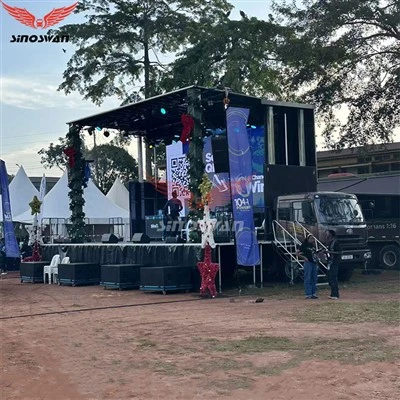
If you’re a production manager, park director, or festival organizer tired of dealing with unreliable temporary stages, endless rentals, or event day disasters, I’d love to chat. We can talk about your specific needs, run numbers that make sense for your budget, and figure out if a mobile stage truck is the right investment for you. Just reach out.
Mobile Banquet Hall References:
- Event Industry News. (2023). 2023 Event Production Trends and Revenue Projections.
- National Recreation and Park Association. (2022). Municipal Event Infrastructure Guidelines for Outdoor Public Gatherings.
- Equipment Financing Association. (2023). Small Business Equipment Purchase and Lease Trends for 2023.
- Mobile Stage Association. (2022). Mobile Stage Safety and Operational Best Practices.
Zhengzhou Sinoswan Tech Co., Ltd.
Zhengzhou Sinoswan Tech Co., Ltd. is one of the most professional mobile stage truck manufacturers and suppliers in China. We are committed to providing high quality customized products for global clients. We warmly welcome you to wholesale durable mobile stage truck for sale here from our factory. Also, quotation is available.
Address: No.21 Shangdu Road, Zhengzhou, Henan Province, China
E-mail: info@sinoswan.com
WebSite: https://www.electiontruck.com/
