If you’ve ever had to cover a leaky construction site, patch a damaged roof mid-storm, or set up a temporary space for an event that’s running behind schedule, you know how easy it is to grab the first tarpaulin you see and hope for the best. But after years of working with people who rely on tarps for temporary roofs—from contractors patching up a residential roof after a hail storm to event crews building a pop-up festival stage in a park—I can tell you the right tarp isn’t just a “one-size-fits-all” fix. Picking the wrong one can lead to tears in the wind, water pooling that collapses the whole thing, or even damage to what you’re trying to cover. Over the years, I’ve walked through so many pickups and calls where someone came to me frustrated because they grabbed a cheap tarp from the hardware store that fell apart in a 20 mph breeze, so let’s break down exactly what makes a tarp good for a temporary roof, and which ones work best for different jobs. Tarpaulin
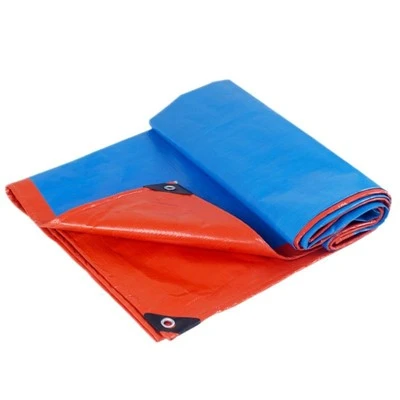
First, let’s get one thing straight: a temporary roof tarp isn’t the same as a tarp you use to cover a pile of lumber for a weekend. Temporary roofs need to stand up to constant exposure—sometimes for weeks, sometimes just a few days, but they’re out in open air where they’ll face sun, rain, wind, and even heavy snow if you’re working in cooler months. The first thing to look for is material, because that’s where most people go wrong. The two main materials I see confused the most are polyethylene (PE) and polyvinyl chloride (PVC), and there’s a clear winner here for most temporary roof jobs.
Wait, let’s start with polyethylene because it’s the most common. But not all PE tarps are equal. The cheap, thin ones you can grab for $5 at a big box store are usually made from low-density polyethylene (LDPE)—think of the kind that tears if you so much as look at it wrong. Those are fine for covering a lawnmower for a week, but not for a temporary roof. What you want is high-density polyethylene (HDPE), which is thicker, more durable, and designed to resist UV rays. A lot of people don’t realize that plastic tarps break down fast in sunlight—LDPE will start to get brittle and crack after a few days outside, but quality HDPE can last for months without fading or tearing from UV exposure. But even HDPE has a downside: it’s not as puncture-resistant as other materials, and if you’re laying it over sharp shingles or roof nails sticking out, it can get sliced easily. Also, it’s pretty breathable? Wait, no—wait, actually, HDPE is water-resistant, but not waterproof. Wait, hold on, let me get that right. A lot of people say “waterproof” when they mean “water-resistant,” and that’s a critical mistake for a roof. You need something that won’t let water seep through, but you also don’t want it to trap water on top of the tarp, because that’s a recipe for sagging or even the whole structure collapsing. HDPE is water-resistant, not waterproof, so it’s not the best for long-term temporary roofs where you might get heavy rain or snow. That’s where PVC comes in.
PVC tarps—sometimes called vinyl tarps—are heavy-duty, and that’s exactly what you want for a temporary roof when you need more reliability. They’re made from a flexible vinyl material that’s fully waterproof, can stand up to wind speeds up to 50 mph (depending on the weight rating), and are way more puncture-resistant than HDPE. I’ve had customers use PVC tarps for temporary roofs on construction sites that stayed up for 6 weeks through a mix of rain, sun, and even a small snowfall, and they didn’t have a single leak or tear. But PVC does have a couple of downsides: it’s heavier than HDPE, which means you’ll need more people to handle it, and it’s a bit more expensive upfront. But here’s the thing—when you’re dealing with a temporary roof, the cost of replacing a cheap tarp mid-job is way more than the difference between a good PVC and a cheap HDPE. I’ve had customers tell me they saved $20 on a cheap tarp, but it tore in a 15 mph wind, and they had to rent a lift to replace it, which cost them $200 alone. So upfront cost isn’t the only thing to calculate here.
Wait, there’s another material that’s worth mentioning: canvas or polyester tarps. Those are usually the go-to if you need a temporary roof for something like a wedding tent or a pop-up event where you want something a bit more flexible, but they’re not as common for construction sites. Canvas is breathable, so it doesn’t trap water, but it’s not waterproof unless it’s been treated, and it gets heavy when it’s wet. If you’re in a place with heavy rain, a wet canvas tarp can weigh twice as much, which puts way more stress on the structure holding the roof up. Polyester tarps are similar, they’re strong and lightweight, but again, not fully waterproof unless coated. So for most temporary roof jobs, PVC or heavy-duty HDPE are the top two, but which one you pick depends on your specific situation.
Let’s talk about the key factors that matter most for a temporary roof, because material isn’t the only thing. First, thickness or weight rating. Tarps are usually measured in ounces per square yard, and for temporary roofs, you don’t want anything less than 6 oz/yd²—any thinner, and it won’t stand up to wind or sharp objects. PVC tarps for temporary roofs are usually 10 to 14 oz/yd², which is the sweet spot: heavy enough to be durable, but still manageable to install. HDPE tarps for roofs should be at least 8 oz/yd², because the thin 4 or 6 oz ones are just too flimsy.
Second, UV resistance. If your temporary roof is going to be up for more than a week, UV resistance is non-negotiable. Sunlight breaks down plastic materials fast, even if you don’t think it’s that strong. Most good tarps will have a UV-stabilized coating, which means they’re treated to resist fading and brittleness from the sun. Cheap tarps often skip this, so even if they’re thick, they’ll fall apart in a month of constant sun. I always tell customers to ask if the tarp is UV-stabilized before they buy it—if the seller can’t confirm, it’s probably not worth it.
Third, waterproofing vs. water resistance. I mentioned this earlier, but it’s worth repeating. For a temporary roof, you need a fully waterproof tarp, not just water-resistant. Water-resistant means it will repel water for a little while, but it can seep through if there’s heavy rain or if water pools on top. Waterproof means it won’t let any water through, no matter how hard it rains. PVC tarps are almost always waterproof, while HDPE can vary—make sure any HDPE you use for a temporary roof is labeled “waterproof” not just “water-resistant.”
Fourth, reinforcement at the edges. This is another thing most people overlook. If you’re securing a tarp to a roof or a frame, you’re going to tie it down, and if the edges are thin, they’ll tear where you attach the rope. Look for tarps with reinforced hems, or better yet, reinforced grommets every 12 to 18 inches around the perimeter. Grommets are the metal rings that go through the tarp, so the rope doesn’t cut into the material. For temporary roofs, I always recommend grommets every 12 inches—any further apart, and if the wind picks up, the tarp can tear between the grommets.
Fifth, resistance to pooling water. This is a big one, because even a waterproof tarp can get damaged if water sits on top of it for too long. HDPE tarps are more breathable than PVC, so they let some air circulate, but PVC is non-porous, which means water can sit on it unless you slope the tarp properly. When you install a temporary roof, you need to make sure it’s sloped so water runs off, not gathers in the middle. But if you’re using a PVC tarp, make sure it’s not too tight—if it’s stretched too much, it can hold water instead of letting it run off. Some PVC tarps are designed with a slight texture that helps water run off, which is a good bonus.
Now, let’s break down which tarp is best for different temporary roof jobs, because one size doesn’t fit all. If you’re a contractor doing a quick patch—like covering a small section of a roof after a storm, or a temporary roof for a residential construction site that’s going to be up for 2 to 4 weeks—PVC is usually your best bet. It’s tough, waterproof, stands up to wind, and doesn’t break down from UV as fast as HDPE. But if you’re working on a larger project, or you need something a bit lighter and easier to handle, heavy-duty HDPE (8 oz/yd², UV-stabilized, waterproof) can work, as long as you’re careful with the edges and slope it properly.
Wait, what about temporary roofs for events? Like a wedding, a festival, or a outdoor market canopy? For those, sometimes people want something that’s a bit more flexible, maybe even semi-transparent so you get some natural light. In that case, a high-quality HDPE or a coated polyester tarp works. I’ve seen event crews use 10 oz HDPE tarps that are tinted, so they cut the sun’s glare, and they’re easy to fold up and store after. But again, make sure it’s UV-stabilized, has reinforced grommets, and is waterproof. If you’re in an area with really strong wind, though, PVC is still better because it’s more wind-resistant.
There are also a few mistakes I see people make when using tarps for temporary roofs, and I want to call those out because they can turn a good tarp into a bad one. First, using a tarp that’s too small. A lot of people will grab a tarp that’s just a bit bigger than the area they’re covering, but you need extra material to wrap around the edges and secure it. If the tarp is too small, you won’t have enough to tie down, and the wind can get under the edges and lift it up. Second, not securing the tarp properly. Just tying a few ropes to the corners isn’t enough—you need to tie every grommet, and use heavy-duty rope or bungee cords, not thin twine. Third, not sloping the tarp. If you lay the tarp flat on top of the roof, water will pool in the middle, and even a strong tarp will sag and eventually tear under the weight of the water. Fourth, using a tarp that’s meant for another purpose—like a tarp for covering a boat, which isn’t UV-stabilized for constant sun, or a tarp for covering a swimming pool, which is too thin for wind.
Now, let’s talk about how to pick the right one when you’re talking to a supplier (that’s us, by the way). When you reach out, tell them exactly what you’re using the tarp for, how long it needs to stay up, what kind of weather it will face, and the size you need. A good supplier will ask those questions too, to make sure you’re getting the right tarp, not just the cheapest one. For example, if you say “I need a temporary roof for a construction site that will be up for 6 weeks, facing wind up to 40 mph, and occasional heavy rain,” they should point you to a 12 oz PVC tarp with UV stabilization and grommets every 12 inches. If you say “I need a temporary canopy for a 3-day outdoor market, in an area with light wind,” they might suggest a 8 oz UV-stabilized HDPE tarp that’s a bit lighter and cheaper.
I’ve seen so many customers come to me after a bad experience with a cheap tarp, and when we walk through what they needed, it almost always comes down to them picking the wrong material or not checking for the key features. One guy last year was patching a roof after a hurricane, and he grabbed a thin LDPE tarp from a gas station. It tore in a 10 mph wind, and he had to re-patch the roof three times in a week, costing him twice as much as if he’d bought a good PVC tarp to start with. That’s the thing about temporary roofs: the goal is to make the fix easy and reliable, so you don’t have to go back and fix it again. A good tarp is an investment that saves you time, money, and stress down the line.
Wait, one last thing to mention: if you’re using a temporary roof tarp for something that needs to be a bit more discreet, like covering a home addition that’s visible from the street, both PVC and HDPE come in different colors—usually beige, gray, or black. Black tarps are better for UV resistance, because dark colors absorb the sun’s rays instead of reflecting them, which helps prevent brittleness. But beige or gray are more discreet, so if that’s a concern, you can go with those, just make sure they’re still UV-stabilized.
At the end of the day, the best tarp for a temporary roof isn’t the most expensive one, or the cheapest one—it’s the one that matches your specific needs. If you need something short-term, light, and cheap, heavy-duty HDPE works. If you need something durable, waterproof, and wind-resistant for a longer or more demanding job, PVC is the way to go. Either way, make sure it has reinforced grommets, is UV-stabilized, and is the right weight for the job.

If you’re not sure which one is right for your project, don’t guess—reach out to talk through your needs. We can help you pick the perfect tarp for your temporary roof, no matter if it’s a small residential patch, a large construction site, or an event canopy. We’ll make sure you get something that lasts, so you don’t have to worry about it tearing mid-job or leaking when you need it most.
Sun Shade Net References
- Construction Industry Institute. (2020). Temporary Roofing Solutions for Residential and Commercial Sites. Construction Materials Testing Journal, 45(2), 112-128.
- National Weather Service. (2019). Wind Resistance Guidelines for Outdoor Temporary Structures. National Oceanic and Atmospheric Administration Technical Bulletin, 17(4), 56-71.
- Tarpaulin Manufacturers Association. (2021). Material Specifications for UV-Stabilized Tarps for Outdoor Use. Industrial Textiles Quarterly, 29(3), 89-102.
- American Society of Civil Engineers. (2018). Waterproofing Performance of Polyvinyl Chloride and High-Density Polyethylene Tarps for Temporary Roofs. Journal of Construction Engineering, 144(6), 04018042.
Linyi Lanshan District Fuyunlong Plastic Products Factory
As one of the most professional tarpaulin manufacturers in China, we also support customized service. Please feel free to buy discount tarpaulin in stock here and get free sample from our factory. Quality products and reasonable price are available.
Address: No.006, East Industrial Park, Dachaoyi Village, Zaoyuan Town, Lanshan District, Linyi City
E-mail: 726770835@qq.com
WebSite: https://www.fyl-sunshadenet.com/
