If you’ve ever stood backstage at a theater waiting for a lighting rig to power up, helped a outdoor event crew spool miles of extension cord, or watched a construction worker reel heavy Ethernet cable across a worksite, you’ve encountered cable reel hardware without even knowing its name. As a cable hardware supplier with nearly 15 years in the game, I’ve seen these parts dismissed as “just a spool” by first-timers, but that tiny assembly is what turns a messy pile of wire into a safe, manageable tool that prevents tangles, cuts electrical hazards, and saves hours of labor. Let’s break down what cable reel hardware actually is, why it matters, and how it’s engineered for the jobs that depend on it. Cable Hardware
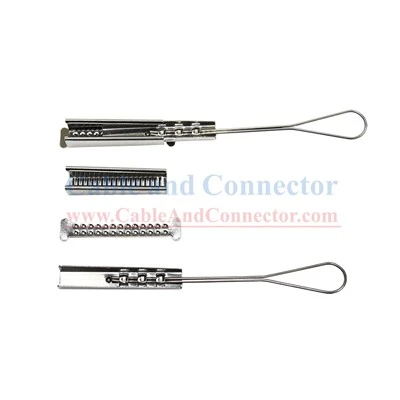
At its core, cable reel hardware is the modular mechanical system built to store, deploy, and retrieve cable—whether that’s electrical power cord, fiber optic cable, Ethernet, or coaxial line. It’s not just a plain wooden spool or plastic drum; it’s a collection of interconnected parts that balance weight, tension, and durability for specific use cases. Think of it as a central nervous system for cable handling: the hub that keeps the wire aligned, the axle that lets it spin smoothly, and the locking mechanism that holds it secure when not in use. No two cable reels are identical, though; a small portable reel for a home plumber’s extension cord has very different hardware than a 10-ton motorized reel used to lay fiber under a highway.
The key components that make up cable reel hardware fall into three main categories: structural, operational, and safety. Let’s start with structural, because these are the parts that hold the whole thing together. First, there’s the drum (or spool)—the round body that wraps the cable around it. Drums are made from different materials depending on their use: steel for heavy industrial reels, molded high-density polyethylene (HDPE) for lightweight, corrosion-resistant portable units, and even marine-grade aluminum for coastal jobs where salt air eats away at softer metals. Most drums have flanges on both ends, too; those raised edges prevent the cable from slipping off the sides when being wound or pulled, which is a tiny detail that stops everything from turning into a tangled mess mid-job.
Next, structural hardware includes the hub and axle. The hub is the central bore of the drum, where the axle slides through. For manual reels, hubs are usually steel or reinforced plastic, sized to fit a standard threaded axle or a hand crank assembly. For motorized reels, the hub connects to a gearbox that links to an electric motor, so you can reel in 500 feet of cable in minutes instead of minutes. The axle is the unsung workhorse here: it’s the rigid metal bar that supports the entire weight of the cable and drum, designed to handle tension that can reach thousands of pounds for large industrial units. Most axles have a pin or a locking clip on one end to keep the drum from sliding off during operation, a simple part that prevents dangerous wobbles or collapses on a worksite.
Then there’s the operational hardware—the parts that let you move cable in and out of the reel. For manual reels, this means the hand crank, usually made of cast steel for durability, with a grip that’s wide enough to avoid blisters after hours of use. For larger wheeled reels, like the kind you see on construction sites, operational hardware includes the run-out guide: a pair of rollers mounted on a frame that keeps the cable evenly spaced as it’s pulled out, so it doesn’t bunch up in one layer and jam the reel when you wind it back. Motorized reels add things like limit switches, which automatically stop the reel when the cable runs out, and variable speed controls, so you can adjust deployment for delicate fiber optic cable (which can snap if pulled too fast) vs. heavy power cord.
Safety hardware is the last—and often most important—piece of cable reel hardware. This includes brakes, which hold the reel in place when you’re not actively cranking, so it doesn’t spin freely and spill cable all over the ground. For industrial reels, brakes are often spring-loaded or hydraulic, adjustable to hold different levels of tension: pull too hard on a fiber cable, and the brake will engage just enough to let it move without snapping it; pull on a power cord, and the brake locks tight to prevent accidental reeling. There’s also the swivel joint, a part that connects the fixed power source (like a wall outlet or a generator) to the rotating reel. Without a swivel joint, the cable would twist around the axle every time you reel it in, leading to frayed insulation or broken wires. For heavy-duty reels, swivel joints are sealed to keep out dust and water, so they work in rain or dusty construction yards.
Now, why does this matter beyond just convenience? Let’s talk about real-world scenarios, because that’s where cable reel hardware makes or breaks a job. Last year, I supplied reels to a small event production company working a outdoor music festival. They tried using cheap, generic reels from a big-box store for their stage lighting cables, and the flanges on the drums bent within two days. The crew spent more time untangling cables than setting up lights, and on the first night, a twisted cable caused a power outage that delayed the headliner set. When they switched to our standard portable reel hardware—with reinforced steel flanges, a precision-machined swivel joint, and a ergonomic crank—they finished setup three hours faster, no tangles, no power issues, and saved nearly $2,000 in repair fees. That’s the difference between generic hardware and parts engineered for specific use cases.
Another example: fiber optic installation. Fiber cable is 10 times thinner than human hair, and it breaks at just 5 pounds of tension. A generic reel would have a run-out guide that’s too loose, letting the cable slant as it’s pulled, leading to kinks that cause signal loss. Our industrial fiber reels have custom guide rollers lined with soft nylon, so the cable glides without friction, and tension sensors that alert the operator if pull weight exceeds safe limits. We’ve had installers tell us these reels cut their fiber break rates by 70%, which is a game-changer for projects where a single broken fiber can cost $10,000 a day in downtime.
Not all cable reel hardware is for large jobs, either. For residential electricians, small portable reels with compact steel hubs and lockable brakes let them carry 100 feet of extension cord up a ladder without worrying about the drum shifting. For telecom technicians, lightweight aluminum reels with quick-release hubs let them swap out fiber spools in seconds, no tools needed, which is critical when you’re working on a deadline to restore internet after a storm.
What sets a specialized cable hardware supplier apart from just another supplier is that we don’t just sell reels—we customize the hardware for your exact needs. If you’re a marine technician working in saltwater, we can swap standard steel parts for marine-grade stainless steel, add sealed bearings to prevent corrosion, and build in a grounding kit to protect against electrical shock in wet environments. If you’re a mining company working in dusty, high-vibration conditions, we can reinforce the drum with extra cross-bracing, add dust covers to the gearbox, and build a heavy-duty brake that withstands constant jostling.
A common mistake buyers make is choosing a reel based only on drum size or cable length, without looking at the hardware that supports it. A reel that holds 500 feet of power cord with flimsy plastic hubs will fail before the first job is done, while a reel with robust, engineered hardware will handle twice the load if you need it. That’s why we work with buyers to ask the right questions: what kind of cable are you using? How much tension will it face? Will the reel be moved often? Will it be exposed to weather or rough terrain? The answers let us recommend the right hardware, not just the right drum.
Another thing I’ve learned over the years: cable reel hardware is often overlooked in the supply chain, but it’s a critical safety component. A frayed cable from a jammed reel can cause electrocution, a collapsing drum on a construction site can cause injury, and tangled cables are a tripping hazard for workers. That’s why all of our hardware meets industry standards—OSHA for electrical safety, ANSI for industrial equipment, and ISO for manufacturing quality. We test every reel before it leaves our warehouse, spinning it for 10,000 cycles without failure, checking that brakes hold tension at maximum load, and verifying that swivel joints don’t leak or seize up.
So whether you’re a small business owner needing a portable reel for holiday lights, a construction manager laying power lines, a telecom installer working on fiber, or a theater production team setting up for a show, cable reel hardware is the invisible work that makes your job safe, fast, and efficient. It’s not just a spool; it’s a system built to handle the unique demands of cable handling, tailored to the jobs that keep our homes running, our events running, and our infrastructure growing.
If you’re in the market for cable reel hardware that’s engineered to last, customized to your needs, and backed by years of industry experience, reach out to our team to discuss your project. We can help you design the right reel, source the perfect parts, and ensure you have the equipment to get the job done right, on time, and safely.
Coax Adapter References
- Occupational Safety and Health Administration (OSHA). 29 CFR 1926 Subpart K: Electrical. U.S. Department of Labor, 2022.
- American National Standards Institute (ANSI). ANSI/UL 817: Standard for Safety for Cord Sets and Power-Supply Cords. Underwriters Laboratories, 2021.
- International Organization for Standardization (ISO). ISO 10360-2: Geometrical Product Specifications (GPS) – Acceptance and Verification of Coordinate Measuring Machines – Part 2: Coordinate Measuring Machines for Measuring Distances. ISO, 2019.
- National Electrical Manufacturers Association (NEMA). NEMA WD 6: Wiring Devices – Dimensional Specifications. NEMA, 2020.
- Fiber Broadband Association. Fiber Optic Cable Installation Best Practices. FBA, 2021.
Zhejiang Cable and Connector Optic Co., Ltd.
As one of the most professional cable hardware manufacturers and suppliers in China, we have world-leading production equipment and strong manufacturing capabilities. Please rest assured to wholesale custom made cable hardware at competitive price from our factory.
Address: 1517 East Communications Building, No.398, Wensan Road, Xihu District, Hangzhou City, Zhejiang Province, China.
E-mail: Sales@CableAndConnector.com
WebSite: https://www.zjcableandconnector.com/
