If you’ve ever visited a machine shop floor at 6 a.m., when the hum of big tools hasn’t yet given way to daily chaos, you know horizontal milling machines are the workhorses that keep production moving. As someone who’s been selling these machines for over a decade—working side by side with operators, maintenance techs, and shop owners—I’ve seen first-hand that even the most well-built horizontal mills don’t last forever. Their lifespan depends on how you care for them, but more often than not, wear and tear creeps in slow, quiet, and hard to spot until it’s too late. Today, I want to pull back the curtain on exactly what causes this wear and tear, so you can keep your horizontal mill running strong for years to come. I’m not here to sell you a brand-new machine (though we do make high-quality ones) right out the gate—I’m here to give you real, practical insight into what’s happening inside that heavy, metal frame when you hit the start button. Horizontal Milling Machine
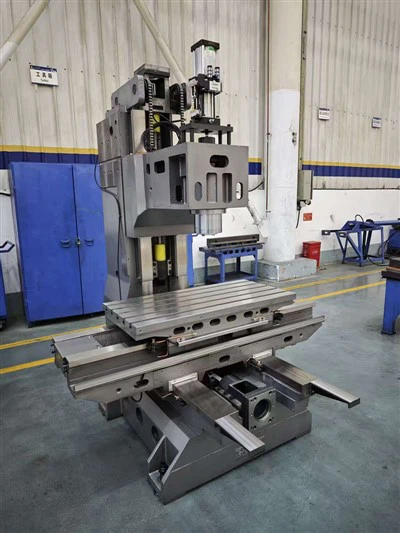
Let’s start with the basics: a horizontal milling machine works by spinning a long, horizontal cutting tool (the arbor) at high speeds, while the workpiece moves against the tool, cutting into metal, plastic, or even composite materials. That constant, forceful contact between two heavy, moving parts is the root of all wear and tear. Unlike vertical mills, which move the cutting tool up and down, horizontal mills have the tool extending from a horizontal spindle, which means they handle much heavier loads, particularly for things like face milling, grooving, or slab milling. Those heavy loads put extra stress on every single component, from the spindle itself to the linear ways that hold the table in place.
The most common form of wear I see every week is adhesive wear. This happens when two metal surfaces that are under heavy pressure rub against each other without enough lubrication. Think about the spindle: when it’s spinning at 1,000 RPM, exerting hundreds of pounds of force on a cutting tool, the inner bearing races and the spindle shaft are pressing so tightly together that tiny bits of metal from each surface fuse together. Then, as the spindle keeps turning, those fused bits tear away, leaving small scratches and grooves on both surfaces. Over time, these grooves make the spindle spin less smoothly, leading to uneven cuts, vibration, and even dimensional inaccuracies in the parts you’re making. I once worked with a shop that skipped a weekly lubrication check on their horizontal mill’s spindle, and within six months, they had to replace the entire spindle—costing them over $8,000 and a week of downtime. That’s a avoidable mistake, right there.
Next up is abrasive wear, which is probably the most aggressive type of wear on a horizontal milling machine. This comes from tiny, hard particles that get into the internal components: metal shavings from previous cuts, dust from the shop floor, even small bits of debris that make their way past the machine’s seals. These particles act like sandpaper, grinding away at the surfaces of parts. The linear ways that the work table slides on are a prime example. Horizontal mills have the table moving back and forth (and sometimes side to side) for long hours, and if even a single metal shaving gets caught between the table and the way, it will carve a deep, scratch-like path into the way’s surface. The damage isn’t just cosmetic, either. Once a way is scarred, the table doesn’t move evenly, leading to inconsistent feed rates, which causes the cutting tool to vibrate, break, or produce parts that are out of spec. I’ve seen shops try to grind down scarred ways to fix them, but that only goes so far—eventually, the way is too thin to hold the table securely, and you’re looking at a major repair or replacement.
Then there’s fatigue wear, which is the silent killer of horizontal milling machines. Fatigue wear happens when components are subjected to repeated stress over thousands, or even millions, of cycles. For a horizontal mill, that means every time the spindle starts and stops, every time the table moves into position, every time a heavy cut is taken, that component is being flexed just a little bit. Over time, tiny cracks form in the metal, usually deep inside the part where you can’t see them. Eventually, those cracks grow, and the part fails catastrophically. I remember a job shop that was running their horizontal mill 24 hours a day, seven days a week, making automotive parts. They never adjusted the spindle speed for different materials—they just ran it at the same 1,500 RPM all day, every day. After about two years, the spindle shaft developed a fatigue crack, and while they were running a heavy slab cut, the shaft snapped in half. It destroyed the arbor, the cutting tool, and even damaged the surrounding gear housing. That shop was down for 10 days, missing a critical delivery, and costing them tens of thousands of dollars in lost revenue. Fatigue wear isn’t something you can fix with a quick lubrication—it’s a product of consistent, unmanaged stress on your machine.
Don’t overlook corrosion and erosion, either, especially if you’re working in a harsh environment. Machine shops that use coolants constantly have to deal with this. Coolants are essential for keeping cutting tools from overheating, but over time, they can break down and become acidic. That acid eats away at the metal surfaces of the spindle, the gears, and the ways. Erosion happens when high-pressure coolants carry tiny particles of metal against the internal surfaces, slowly wearing them away. I once visited a mold shop that had an older horizontal mill that was exposed to a lot of water-based coolant. The machine’s spindle housing started to rust from the inside out, and the rust flaked off, getting into the bearings and causing more wear. By the time they noticed, the spindle was already making a loud, grinding noise, and it took a new set of bearings and a housing rebuild to fix it. That could have been avoided by regularly draining and replacing old coolant, and keeping the machine’s sealed components in good condition.
Now, here’s the thing: not all wear and tear is inevitable, and a lot of it comes from how you operate and maintain your machine. I’ve seen two identical horizontal mills, working in the same shop, doing the same job, with one running for 15 years with only minor repairs, and the other needing major overhauls every three years. The difference wasn’t the machine itself—it was the operator and maintenance team. Let’s talk about what you can do to slow down wear and tear. First, stick to a strict lubrication schedule. Every horizontal mill has a manual that tells you exactly when to oil the spindle, the gears, the ways, and the ball screws. Follow it. Don’t cut corners to save a few minutes—lubrication is the single most effective way to reduce adhesive and abrasive wear. Second, keep the machine clean. Every shift, wipe down the ways and spindle, and make sure no metal shavings or debris are left inside the machine. Check the seals on the spindle and the table regularly—if a seal is broken, debris will get in, and that’s a fast way to damage expensive parts. Third, operate the machine correctly. Don’t overload it beyond its capacity, don’t run the spindle at a speed that’s too high for the material you’re cutting, and don’t force the table to move if it’s stuck (that can put extra stress on the ways and gears). Finally, invest in regular preventive maintenance. Even if your machine is running smoothly, have a technician come in every six months to check the spindle runout, the alignment of the ways, the condition of the bearings, and the coolant. Small, early repairs are way cheaper than major overhauls or replacements.

As a horizontal milling machine supplier, I’ve spent years building machines that are durable enough to handle heavy production, but even the best machine will wear out if it’s not cared for. Wear and tear is a natural part of using industrial machinery, but understanding what causes it—adhesive, abrasive, fatigue, corrosion, and erosion—lets you take steps to slow it down and keep your machine working for longer. If you’re tired of dealing with unexpected breakdowns, or you’re looking for a horizontal mill that’s built to minimize wear from day one, I’d be happy to walk you through our line of machines, explain the maintenance features that help reduce wear, and answer any questions you have about keeping your equipment in top shape. Whether you’re a small job shop with one machine or a large facility with multiple horizontal mills, I’m here to help you make the right choice for your production needs. Don’t wait until a breakdown costs you time and money—reach out to discuss how we can support your operations and find the right solution for your workshop.
Box Way Vertical Machining Center References
- Todd, R. H., Allen, D. K., & Alting, L. (1994). Manufacturing Processes and Systems. Chapman & Hall.
- Kalpakjian, S., & Schmid, S. R. (2014). Manufacturing Engineering and Technology (7th ed.). Pearson.
- Boothroyd, G., & Knight, W. A. (2006). Fundamentals of Metal Machining and Machine Tools (3rd ed.). CRC Press.
- American Society of Mechanical Engineers. (2018). Maintenance of Industrial Machinery: Best Practices for Wear Reduction and Equipment Longevity. ASME Press.
Smartech Machinery & Equipment Co., Ltd.
As one of the most professional horizontal milling machine machine manufacturers and suppliers in China, we also support customized service. Please rest assured to buy bulk horizontal milling machine machine made in China here from our factory. Contact us for more details.
Address: Room 2832, Changping Commercial Mansion, Shihua Road, Futian Free Trade Zone, Shenzhen, China
E-mail: smartech@smartechcnc.cn
WebSite: https://www.smartech-cnc.com/
