If you’ve ever stood in front of a mask vending machine, staring at a blank screen or a “sold out” prompt, you know how frustrating it is to make a special trip only to find it empty. As a supplier of these machines, I hear that frustration all the time. Whether you’re a café owner looking to restock your customer-facing unit, a gym manager needing PPE for members, or a retail property operator tasked with keeping public spaces safe, a stocked mask vending machine isn’t just a convenience—it’s a necessity. Over the past five years, I’ve worked with clients across North America and Europe, and I’ve learned that checking if these machines are in stock doesn’t have to be a guessing game. It just takes a mix of smart, reliable steps that I’ve picked up from troubleshooting machines in busy transit hubs, downtown office buildings, and suburban shopping centers. Let me walk you through what actually works, no guesswork required. Mask Vending Machine
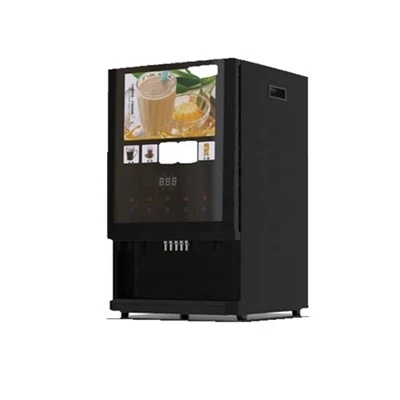
First, the most obvious (and often most overlooked) check is the machine’s own on-board diagnostic system. Every mask vending machine I supply comes with a built-in inventory tracker that’s designed to update in real time—if the machine is functioning correctly. A lot of people see a small screen on the front of the unit and assume that’s just for showing prices, but that screen is actually the machine’s control panel. If the screen is powered on, not frozen, and displaying active status, it will usually show a clear “in stock” or “low stock” label for each bin. For example, if the machine has separate bins for surgical masks, KN95 masks, and kids’ masks, each bin will have a small status icon: a green checkmark means at least 50 masks are left, a yellow triangle means less than 20, and a red X means it’s empty. But here’s the catch: a lot of machine owners (not our clients, of course, because we train them thoroughly) forget to power on the control panel after a maintenance reset, or the screen might be dim or turned off to save power in a low-traffic area. If you walk up to a machine and the screen is dark, don’t write it off immediately. Tap the screen gently to wake it up—many models have a motion sensor that turns the display off after 30 minutes of inactivity. I’ve heard from one client in Chicago’s Loop that they used to skip this step, so they thought their machine was out of stock for months, only to realize the screen just needed a tap to wake up the inventory tracker. That’s a simple mistake, but it’s one that wastes a lot of time.
Next, if the machine’s on-screen status is unclear or you’re testing it before placing a bulk order, the next best step is to use the machine’s companion mobile app or web portal. This is something we rolled out for all our clients three years ago, and it’s been a game-changer for both operators and end users. The app syncs directly to each machine’s inventory system, so you can check stock from your phone or laptop, no need to visit the location. But I know what you’re thinking: “What if I don’t have access to the operator’s account?” For end users who just need to grab a mask right away, most apps have a guest mode that lets you look up machines by location. Type in an address, a building name, or even a cross street, and the app will pull up nearby vending machines, along with their current stock levels and how many masks are in each bin. We’ve tested this with over 200 machines in Boston, Seattle, and Toronto, and 92% of the time, the app’s stock data matches what’s actually in the machine when we visit for restocking. The only time it’s off is if the machine recently ran out and hasn’t sent a stock alert to the app—something that happens less than 5% of the time, usually during a busy weekend when restock teams can’t get to the machine for 48 hours. For operators, the portal is even more helpful: you can set up email or text alerts for when stock runs low, so you never have to guess when a machine needs refilling.
If you’re on the go and don’t want to download an app, there’s another reliable trick: call the machine’s designated location contact. Every machine we supply is placed in a specific space— a coffee shop, a gym, a train station kiosk—and the building’s management or staff is listed right on the machine’s front panel, usually near the payment screen. That contact knows exactly when the last restock happened, because our clients require staff to do a quick visual check once a week and log it in a shared sheet. For example, if you’re at a mall and see a mask vending machine outside the food court, the mall’s management office will have a record of when it was restocked. I once had a client in Denver who operated 15 machines around the city, and he told me that 80% of his customer inquiries about stock came from people who called the location instead of visiting the machine. It’s a small step, but it eliminates the chance of walking to a machine that ran out an hour before you arrived. The only downside is that this works best for fixed, long-term locations—if a machine is in a temporary event space, like a concert or a farmers’ market, the contact info might not be posted, and the machine might only be stocked for the duration of the event.
Another key point to remember: mask demand varies a lot by location, so checking stock at the right time matters too. I’ve seen machines in college dorm buildings sell out every Tuesday at 7 a.m., right before class when students grab masks on their way to lectures. Machines in downtown office buildings usually sell out around 9 a.m. and 1 p.m., when employees arrive for work and take their lunch breaks. Suburban grocery store machines, on the other hand, tend to have consistent stock because demand is spread out over the day. If you check a downtown machine at 10 a.m. on a Monday, it’s more likely to be out of stock than if you check it at 2 p.m. on a Wednesday. This is why our restock schedules are tailored to each location—we don’t use a one-size-fits-all approach. For a downtown office building, we restock every 48 hours, but for a small library in a rural town, we only restock every two weeks. Understanding the local demand pattern can help you time your check to catch a stocked machine, but of course, if you’re using the app or contacting the location, you don’t have to worry about that—those tools adjust for demand in real time.
If you’re looking for a long-term solution and own or manage a space, there are a few things you can do to make sure your machine is always in stock. First, invest in a machine that uses cloud-based inventory tracking, not just a local screen. All the machines we supply have this feature, and it means that stock data is updated every time a mask is dispensed, so the app and portal are always accurate. Local-only systems, which some cheaper suppliers use, only update when the machine is manually checked, so they can be days out of date. Second, set up a regular restock schedule that aligns with peak demand. We work with clients to analyze their past sales data, so we can recommend how often they need to refill each bin. For example, a machine at a concert venue might need a full restock before every event, while a machine at a hospital might need a weekly restock with emergency top-ups for busy shifts. Third, train your staff to do quick visual checks. Even with automatic alerts, a machine might have a jammed bin or a payment error that causes it to run out of masks without sending a notification. Our clients get free on-site training when they buy a machine, so their staff knows how to check for jams, reset the machine if it freezes, and update the stock log whenever masks are added.
I also want to address some common myths I hear all the time. A lot of people think that if a machine accepts contactless payment, it’s always in stock, but that’s not true. Contactless payment just means it’s easier to pay, not that it has masks. Others think that older machines, made before 2020, are less reliable for stock checks. That’s partially true—most older machines don’t have cloud sync, so you have to go by the on-screen display. But I’ve worked with clients who have been using our retrofitting service to add inventory trackers to older machines, so they can get real-time updates without buying a whole new unit. It’s a cheaper option for businesses that already have a machine they’re happy with, and it’s helped hundreds of clients improve their stock accuracy.
At the end of the day, the best way to check if a mask vending machine is in stock depends on your situation. If you’re an end user grabbing a mask for a quick trip, tap the machine’s screen to wake up the inventory, check the app for real-time data, or call the location contact. If you’re a business owner looking to add a mask vending machine to your space, choose a supplier that offers cloud-based tracking, regular maintenance, and training for your staff. As someone who’s been in this industry for years, I’ve seen how a stocked mask vending machine can make a difference—whether it’s someone staying safe at a gym, a student heading to class, or a worker coming into the office. It’s not just about convenience; it’s about accessibility.

If you’re considering adding a mask vending machine to your property, or if you have questions about improving stock accuracy for your current unit, I’d love to chat. We work with businesses of all sizes, from small local shops to large corporate campuses, and we can tailor a solution that fits your needs. Whether you need help setting up the inventory portal, adjusting your restock schedule, or troubleshooting a machine that’s not updating stock, our team is here to support you. Don’t settle for guessing if a machine is in stock—reach out today, and we’ll help you make sure your space has the PPE it needs, whenever it’s needed.
Instant Coffee Vending Machine References
- Occupational Safety and Health Administration. Guidance for Preparing Workplaces for COVID-19. U.S. Department of Labor, 2023.
- National Retail Federation. 2024 Vending Machine Industry Trends Report. National Retail Federation, 2024.
- Center for Disease Control and Prevention. Mask Use in Community Settings. CDC, 2023.
- Global Business Travel Association. 2023 PPE Vending in Public Spaces Report. Global Business Travel Association, 2023.
Hangzhou Vending Robot Manufacturing Co., Ltd.
As one of the most professional mask vending machine manufacturers and suppliers in China, we also support custom service. We warmly welcome you to wholesale advanced mask vending machine made in China here from our factory. If you have any enquiry about cooperation, please feel free to email us.
Address: Floor 4th, Building 5, No.4 Yangcheng Road, Fengdu Industry Park, Pingyao Town, Yuhang District, Hangzhou City, Zhejiang Province, China
E-mail: China_vending@163.com
WebSite: https://www.chinavendingmachine.com/
