If you’ve ever stood at a plant boundary and caught a whiff of unprocessed exhaust, or seen a regulatory alert pop up about excess particulate matter in a local air quality report, you know how critical waste gas treatment equipment is—especially for industries like manufacturing, pharmaceuticals, or metalworking. As a supplier of this gear, I get more than my share of questions from plant managers, EHS leads, and even small-business owners who want to know: “How do I make sure my new (or existing) equipment is actually working the way it should?” It’s not just about passing a one-time inspection, either; over time, wear, drift, and process changes can make even the best-performing systems fall short. Today, I’m breaking down the practical, science-backed steps to test efficiency, from the day you install a unit to the routine checks you’ll run for years. Waste Gas Treatment Equipment
First, let’s start with why this matters beyond compliance. A lot of operators treat efficiency testing as a box to tick for local environmental regulators, but skip the deeper checks that reveal how their equipment performs under real conditions. Let’s say you install a wet scrubber to remove hydrogen sulfide from your chemical plant’s exhaust. It might pass a quick test on the factory floor, but once you run it for 12 hours straight at peak production, the spray nozzles clog with scale, and removal rates drop from 95% to 72%—a gap that could lead to fines, public complaints, or even shutdowns. That’s why we emphasize field-testing, not just lab simulations, because real waste gas has variables: fluctuating flow rates, unexpected contaminants, and temperature swings that never show up in controlled test settings.
The first phase of testing is commissioning validation, done right after equipment installation. This is non-negotiable, because it catches design flaws or installation mistakes before you commit to long-term operation. Let’s walk through what that entails. First, you need to establish a “baseline performance standard” before you even turn the equipment on. Work with your team to map your source waste gas: what’s the volume (in cubic feet per minute, or CFM), what contaminants are present, their concentration (parts per million, or ppm), and the operating temperature and humidity. For example, a metal fabrication plant’s exhaust will have more particulate matter (dust, metal shavings) than a pharmaceutical plant, which might have solvent vapors like ethanol or acetone.
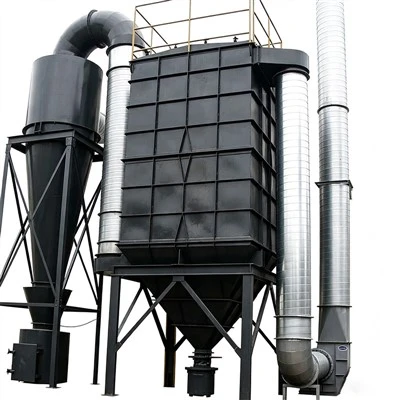
Next, during commissioning, you’ll run two key tests: a controlled “clean gas” test and a live “process gas” test. The clean gas test uses a known, consistent mixture of the target contaminant, pumped directly into the equipment’s inlet. This lets you measure the equipment’s maximum possible efficiency in a stable environment. For a baghouse (a common particulate control system), you’d test how well it captures standard-sized dust particles (1 to 10 micrometers, the range that’s most harmful to human lungs) by comparing particle counts at the inlet and outlet. For a catalytic oxidizer, you’d test the destruction rate efficiency (DRE) of a reference solvent, like toluene, which is a common test compound because its oxidation chemistry is well-documented.
The live process test is where you really verify performance, because it uses the actual waste gas your system will handle. Here, you’ll work with a certified industrial hygiene or emissions testing firm to take simultaneous inlet and outlet samples. The method depends on the contaminant: for gaseous compounds, you might use a sorbent tube that collects the gas, which is then analyzed in a lab with gas chromatography (GC); for particulates, you’ll use a filter method, where you weigh the filter before and after sampling to calculate mass removal. A red flag here is if the live test result is 10% or more lower than the controlled test—this means your equipment is struggling with real-world conditions, like variable flow or unexpected contaminants.
Once commissioning is done, routine performance monitoring is the next step, and this is where many plants cut corners. We recommend two levels of routine testing: daily operational checks and quarterly/annual formal efficiency tests. Daily checks are simple, hands-on steps your in-house team can do to catch issues early. For a scrubber, this means checking the inlet and outlet pressure gauges (a sudden spike in outlet pressure could mean a nozzle clog, while a drop might mean a leak in the ductwork). For a thermal oxidizer, you’ll monitor the outlet temperature—if it’s 50 degrees lower than the setpoint, your fuel supply might be too low, so the oxidizer isn’t hot enough to destroy contaminants. We provide our customers with digital dashboards that track these metrics in real time, because manual checks can miss small, slow changes that add up over time.
Quarterly formal tests, on the other hand, are more comprehensive, and should be done by a third-party to avoid bias. These tests measure not just single contaminants, but overall efficiency across the entire range of operating conditions. For example, if your plant runs two shifts a day, you’ll test at low, medium, and high flow rates to make sure the equipment doesn’t only perform well at one setting. A key point here is that efficiency isn’t a static number: a wet scrubber’s efficiency might be 98% at a liquid-to-gas ratio (L/G) of 10 gallons per 1,000 cubic feet, but drop to 85% at an L/G of 5, which is a common setting if the plant tries to save on water costs. That’s why your tests should map efficiency across all operational parameters, so you can find the sweet spot between performance and cost.
Another often-overlooked factor is fouling, which is the buildup of contaminants on internal equipment parts over time. Fouling can happen in any system: dust clogs baghouse filters, scale forms on scrubber nozzles, and carbon deposits build up in catalytic oxidizer beds. To test for fouling, we recommend a “pre- and post-maintenance” efficiency test. For example, if you replace a baghouse’s filters and run a test, you should see a noticeable jump in particulate removal (from, say, 90% to 99.5%). If after maintenance, efficiency still doesn’t improve, the problem might be in the ductwork or the fan, not the filters—something a test will reveal before you waste money on replacement parts.
We also want to talk about emerging contaminants, because regulations are tightening up on compounds like volatile organic compounds (VOCs) and hazardous air pollutants (HAPs) that weren’t heavily regulated a decade ago. A lot of our customers have upgraded from basic systems to ones that can handle these compounds, but they don’t test for them regularly. For example, if your plant uses a new chemical that releases a previously unmeasured contaminant, you need to test your equipment’s ability to remove that compound, not just the ones it was designed for. We work with many clients to conduct custom test panels that include both regulated and process-specific contaminants, so they’re prepared for both current and future regulations.
Wait, but what about old equipment? A lot of our customers don’t want to replace their waste gas treatment systems—they want to know how to test and improve efficiency without a full overhaul. That’s why we also offer retrofitting assessments, which include testing the existing system’s performance, identifying gaps, and suggesting low-cost fixes. For example, if a 10-year-old scrubber has a 15% efficiency drop, we might suggest adding a demister to reduce carryover of liquid droplets (which can carry contaminants) or adjusting the spray nozzles to improve gas-liquid contact. A test before and after the retrofit will confirm if the fix works, so you don’t invest in something that doesn’t move the needle.
Now, let’s get into some common pitfalls we see, because even well-intentioned tests can go wrong if you skip a step. First, don’t take a single test run as the final word. Waste gas has day-to-day variations: on a hot day, humidity can affect how solvents evaporate, or on a Monday, production might start slower, so exhaust volume is lower. We recommend running at least three test runs over a 24-hour period, covering different production shifts, to get a true average. Second, don’t ignore leak testing. Even a small leak in the ductwork between the process and the treatment equipment can make your outlet measurements look better than they are, because you’re sampling diluted exhaust, not the actual treated gas. A simple smoke test (pushing smoke through the ductwork and looking for leaks) during routine checks can catch this. Third, don’t overlook maintenance logs. If your in-house team skips cleaning a filter for six months, that will show up in efficiency tests, but if you track maintenance, you can correlate it with performance. We always tell customers that maintenance logs are as important as test results—they help you identify patterns, like “every time we skip a nozzle cleaning, efficiency drops in two weeks.”
At the end of the day, testing efficiency isn’t just about compliance—it’s about protecting your business. A poorly performing waste gas treatment system can lead to fines (which can run into tens of thousands of dollars for a single violation), damage to your equipment from corrosive contaminants, and even damage to your brand if local communities see you’re releasing harmful pollutants. As a supplier, we don’t just sell you equipment and walk away; we provide guidance on testing, help you schedule third-party tests, and offer retrofits to keep your system running efficiently for years. If you’re unsure how to test your current equipment’s efficiency, or if you’re considering new gear and want to make sure it meets your performance needs, reach out to our team to discuss your specific operations and find a solution that fits.
Before I wrap up, I want to note that all the guidance I’ve shared is based on standard industrial emissions testing methods, as outlined by leading environmental organizations and regulatory bodies. For more detailed information on testing protocols for specific contaminants, you can refer to the resources below.
Wastewater Treatment Equipment References
- U.S. Environmental Protection Agency. (2021). Test Methods for Evaluating Solid Waste, Physical/Chemical Methods (EPA Method 1 through 325).
- National Institute for Occupational Safety and Health. (2019). Industrial Ventilation: A Manual of Recommended Practice for Design.
- Air & Waste Management Association. (2020). Measurement of Air Pollutants: A Practical Guide.
- American Society of Mechanical Engineers. (2018). Performance Test Codes for Gas-Handling Systems and Equipment.
Ningbo Jialong Energy-saving and Environmental Protection Technology Co., Ltd.
As one of the most professional waste gas treatment equipment manufacturers and suppliers in China, we also support customized service. We warmly welcome to buy advanced waste gas treatment equipment in stock here from our factory. If you have any enquiry about quotation, please feel free to email us.
Address: Dong Village, Dongwu Town, Yinzhou District, Ningbo City, Zhejiang Province (No.63 Zhennan Road, Dongwu Town)
E-mail: Lin.cx@nb-jalo.com
WebSite: https://www.cnjialong.com/
