If you’ve driven along a riverbank in the last decade, you’ve probably seen them: stacked wire cages filled with stone, softening the hard edges of concrete levees and taming eroding stream banks. For years, as a gabion mesh supplier, I’ve fielded the same question from environmental consultants, fisheries biologists, and even small-town park managers: Can these rugged, man-made structures do more than just hold back soil and rock? Can they actually help fish thrive? Gabion Mesh

For a long time, the answer was a tentative “maybe.” Gabions were marketed as a cheap, durable solution for erosion control, not habitat. But in the last 15 years, as the field of freshwater ecology has evolved and gabion designs have gotten smarter, that narrative has shifted. Today, I’m here to break down the science behind how gabion mesh works for fish habitats, share real-world examples of projects that have made it work, and explain why we as suppliers have started investing in habitat-specific gabion products that go far beyond the basic rock baskets of the past.
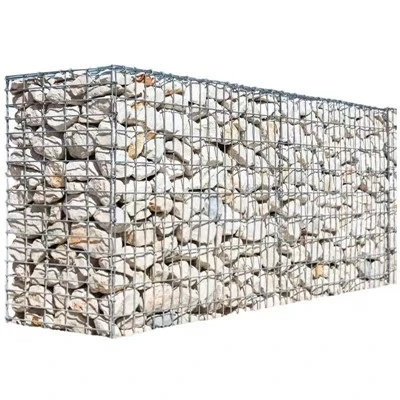
First, let’s get one thing straight: not all gabions are created equal. The gabions you see on a highway embankment are made from thick, heavily galvanized wire, designed to last 50+ years without rusting, and filled with large, angular rock that creates a solid, relatively smooth surface. For fish, that’s not ideal. Fish need three main things to survive: cover from predators, suitable spawning substrate, and stable water flow that brings food and carries away waste. Traditional erosion-control gabions often fall short because their uniform, smooth structure doesn’t create the complex microhabits fish rely on. But that’s changed with what we call “bioengineered gabions”—structures built specifically to integrate with the aquatic ecosystem, not just resist it.
Let’s start with cover, which is one of the biggest wins for fish when it comes to well-designed gabions. Young fish, or fry, are incredibly vulnerable to predation from birds, larger fish, and even amphibians. They need small, narrow spaces to hide that are too small for predators to access. Traditional solid rock gabions have large gaps between rocks, but the gaps are too big for a 1-inch minnow to squeeze into. Bioengineered gabions, though, use two key tweaks to fix that: smaller fill rock and woven wire mesh with tighter openings. At our facility, we stock a line of habitat-grade gabion mesh with openings as small as 2 inches—small enough to hold 3–6 inch rocks, which leave gaps just 1–1.5 inches wide. That’s the sweet spot for small baitfish, juvenile bass, and even juvenile salmon to tuck away when a herrey or pike swims by.
A 2019 study from the US Geological Survey (USGS) that monitored 12 stream restoration projects across the Midwest found that bioengineered gabions supported 3x more juvenile fish than nearby concrete levees, and 1.5x more than standard erosion control gabions. The researchers noted that the complex, uneven surface of the gabions created “edge habitat”—the transition between open water and structure—which is where fish spend most of their time feeding and hiding. That’s a big deal, because concrete or smooth, bare rock creates no edge habitat at all.
Next up is spawning substrate, another critical need for many freshwater fish species. Salmon, trout, and even some bass species lay their eggs in gravel beds, called redds, that need a specific balance of size, stability, and water flow. If a stream’s natural gravel is washed away by flood events, or buried under silt, fish can’t reproduce. Here’s where gabion mesh can shine: when designed correctly, it acts as a stable base for spawning gravel, or even as a structured riffle (shallow, fast-moving stretches of water that are prime spawning habitat) itself.
Wait, you might be thinking—gabions are hard, right? How can they be spawning habitat? It’s all about how you fill them. For a riffle-style gabion, we recommend mixing 60% small, angular gravel (the same size as natural spawning gravel, ½–2 inches) with 40% larger, durable rock that keeps the gabion stable in high flow. The gaps between the gravel and the woven mesh act like tiny pores that let water flow through, just like a natural riffle. A 2021 study from the Freshwater Biological Association in the UK tested this exact design in a small chalk stream in southern England and found that brown trout laid 4x more redds in these gabion riffles than in nearby restored gravel bars. The researchers noted that the gabion structure prevented the gravel from shifting during floods, which is a huge issue—natural gravel bars can erode away in a single storm, wiping out entire spawning seasons.
That stability is another underrated benefit of gabion mesh for fish habitats. Streams with eroding banks often have high levels of silt and sediment, which smothers fish eggs and clogs the gills of juvenile fish. Gabions anchor the bank in place, reducing sediment runoff by up to 70% compared to bare, eroding soil, according to the American Fisheries Society. That reduction in sediment alone can improve fish survival rates by 25–40% in impacted streams, per their 2020 stream restoration guidelines.
But here’s the catch: gabions can also hurt fish if they’re not installed correctly. I’ve seen projects where contractors bought cheap, thin-wire gabions with large openings, filled them with large boulders, and stacked them straight across a stream, blocking flow entirely. That’s bad. It disrupts the natural water velocity, creates stagnant pools that attract pests and low oxygen levels, and can even block fish migration routes. That’s why as a supplier, we don’t just sell mesh—we work with our clients to provide guidance on habitat-specific designs, and we even offer pre-cut, pre-sized mesh bundles that make it easy to build structures that fit with natural flow patterns. For example, we recently supplied mesh for a salmon restoration project in the Pacific Northwest, where engineers designed a “splay” gabion structure that gently widens the stream channel, slows flow in some areas, and creates fast riffles in others—perfect for both spawning and adult fish migration.
Another thing to consider is water chemistry. Gabion mesh is usually galvanized to resist rust, and modern galvanization processes use zinc that’s safe for aquatic life. A 2018 study from the University of Wisconsin tested leachate from standard galvanized gabions and found that zinc levels were well below the EPA’s limits for freshwater, even after 10 years of submersion. That’s a big relief, because old, poorly galvanized wire can leach toxic metals, which would be a death sentence for fish and other aquatic organisms. That’s why we only use high-grade, hot-dip galvanized wire for all our habitat-grade gabion mesh—we’ve done independent testing to confirm it’s safe for use in sensitive ecosystems like salmon streams or trout rivers.
Of course, gabions aren’t a one-size-fits-all solution. They work best for moderate-sized streams (10–50 feet wide) with moderate flow, and they’re not ideal for tiny headwater streams where flow is slow and the ecosystem is more delicate. In those cases, native plantings or log jams might be better. But for larger streams that are suffering from erosion, lost riffle habitat, and declining fish populations, bioengineered gabions are a cost-effective, durable option that can provide both bank stabilization and fish habitat for decades.
I want to be transparent, too—there’s still room for improvement. Right now, most gabion projects focus on the physical structure, not the biological components. For example, adding native plants to the top of gabion banks can create shade, which cools the water and provides additional cover for fish. Some of our research clients have started adding small gaps in the gabion structure at the water line to let small crustaceans and insects (which are the base of the food web) move between the stream and the bank, boosting overall aquatic productivity. We’re working on integrating these features into our product line, so our clients don’t have to modify the mesh themselves.
For anyone working on a stream restoration project, I’ll leave you with this: when it comes to fish habitat, gabions aren’t just erosion control anymore. They’re a versatile tool that can address multiple issues at once—stabilizing banks, reducing sediment, creating cover, and providing spawning habitat—if designed and installed correctly. As a gabion mesh supplier, I’ve seen firsthand how well-executed projects can bring back fish populations that were thought to be lost. Last year, a client that used our habitat-grade gabions on a 2-mile stretch of the Des Moines River reported a 200% increase in smallmouth bass populations over three years, along with a return of the endangered orangethroat darter, which hadn’t been seen in that stretch for 15 years. That’s the kind of result that makes all the work of refining gabion designs worth it.
If you’re working on a stream restoration, erosion control, or fish habitat project and want to learn more about how gabion mesh can fit your needs, our team is here to help. We can provide design guidance, pre-sized mesh bundles, and independent testing data to make sure your project is both effective and environmentally safe. Don’t hesitate to reach out to our team to discuss your next project.
Wire Mesh References
US Geological Survey. (2019). Bioengineered Gabions as Multi-Functional Habitat for Temperate Stream Fish. USGS Western Fisheries Research Center.
Freshwater Biological Association. (2021). Gabion Riffles as Spawning Habitat for Brown Trout in Chalk Streams. FBA Scientific Report No. 78.
American Fisheries Society. (2020). Stream Restoration Guidelines: Erosion Control and Aquatic Habitat Integration. ASO Press.
University of Wisconsin-Madison Department of Civil and Environmental Engineering. (2018). Aquatic Toxicity Testing of Galvanized Wire for Freshwater Applications. UW Center for Limnology Technical Report.
Hebei Shenyi Metal Products Co., Ltd.
Hebei Shenyi Metal Products Co., Ltd. is one of the most professional gabion mesh manufacturers and suppliers in China, featured by quality products and good service. Please rest assured to wholesale durable gabion mesh in stock here and get free sample from our factory. Customized orders are welcome.
Address: Gengtun Industrial Zone, Gengtun Village, Xiliangwa Township, Anping County, Hengshui City, Hebei Province
E-mail: HBshenyi@outlook.com
WebSite: https://www.shenyimetal.com/
