If you’ve ever worked in wire drawing, nail manufacturing, or any industry that relies on carbide nail dies, you know these small components are the unsung heroes of consistent production. As a carbide nail die supplier who’s spent the last 12 years helping manufacturers keep their lines running, I’ve seen firsthand what happens when a die wears out prematurely: misformed nails, material waste, and costly downtime that can derail even the most well-planned production schedules. The good news? You don’t have to wait for a batch of faulty nails to realize your die is past its prime. Knowing how to spot wear early saves you time, money, and frustration. Let’s break down the science of carbide nail die wear, the most common red flags to watch for, and what to do once you confirm a die is worn out. Carbide Nail Dies
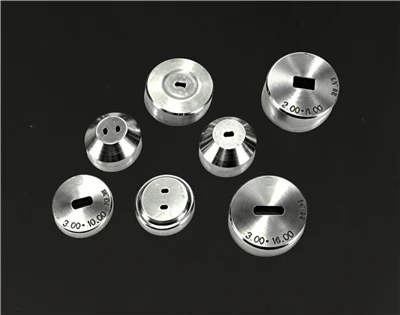
First, let’s get clear on what a carbide nail die does and why it wears. Carbide (tungsten carbide, specifically) is chosen for these dies because it’s extremely hard—harder than most steel, which makes it ideal for drawing wire into nail blanks and forming the nail point. The die’s core is a precision-machined hole, usually composed of three zones: a entrance (where raw wire feeds in), a bearing zone (which controls the nail’s diameter and straightness), and a exit (where the finished nail is released). Wear happens when two things collide: the continuous friction of high-tensile wire moving through the die, and the occasional impact of hard metal particles or impurities in the wire stock. Unlike steel dies, carbide doesn’t bend or corrode easily, but it does wear gradually over time, and ignoring that wear leads to avoidable issues.
Now, how do you check for wear? Let’s start with the most immediate, hands-on inspections that anyone on the production floor can do daily—no fancy lab equipment required. The first red flag is inconsistent nail diameter. A new carbide die’s bearing zone is a perfect, uniform cylinder. As the die wears, this zone widens slightly (a process called “abrasive wear”) or develops uneven grooves, so the wire isn’t shaped evenly. You’ll notice this as variance in nail length or diameter across a single production run. For example, if your line typically produces 2-inch nails with a ±0.005-inch tolerance, suddenly you’re getting nails that range from 1.99 to 2.01 inches, that’s a clear sign the die is starting to wear. I’ve had customers call me in a panic because their inspection team rejected a 10,000-piece batch of nails, only to find the die’s bearing zone had worn 0.012 inches in just 3 weeks—way faster than the expected 0.002 to 0.005 inches per 10,000 nails for standard carbide dies.
Next, check for surface defects on the nail point. The exit zone of the die forms the nail’s tip, right? If that zone develops micro-scratches or uneven edges from wear, the nail point will be rough, or even split as it’s formed. You’ll often see “burrs” along the nail’s tip, or tips that aren’t perfectly conical—some tips will be shorter, some will have a flat spot, or they’ll bend easily when you try to drive a nail into wood. I like to tell my customers: take 10 random nails, drive each one into a piece of soft pine, and see how many bend or chip at the tip. If more than one does, it’s almost never the wire—9 times out of 10, that’s a worn die.
Then there’s the “pull force test,” a simple, underrated way to measure die wear without stopping your line completely. Here’s how it works: when you pull wire through a new die, it takes a consistent amount of force to move the material. As the die wears, the contact area between the wire and the die’s wall increases, which means you need more pull force to draw the same wire. If you’ve noticed your wire drawing machine’s amperage has spiked 10 to 15% over the last month, that’s a dead giveaway. I’ve seen customers brush off a 12 amp increase as “normal machine wear,” but that extra force is exactly the die doing more work to shape the wire, which means it’s already wearing past its optimal point. Pro tip: keep a log of your pull force measurements for each die. When the force increases by 15% or more, that’s when it’s time to inspect the die more closely.
Now, if those quick checks turn up something off, you’ll want to do a more thorough inspection of the die itself. Remove the die from the drawing machine (make sure to clean off any oil or wire shavings first) and look at it under a magnifying glass—even a basic 10x loupe works for this. A new carbide die’s surface should be smooth, almost glassy, with no visible scratches, pitting, or unevenness. If you see fine, parallel scratches along the sides of the bearing zone, that’s abrasive wear from hard particles in the wire (like rust scales or metal shavings left in the drawing line). If the scratches are random, that’s adhesive wear—when small pieces of wire material stick to the die and get pulled off as the wire moves, creating little pits on the die’s surface. Both of these will lead to inconsistent nail quality, so it’s a clear sign the die needs to be replaced.
Another thing to look for: the entrance zone. The entrance is a tapered funnel that guides the wire into the bearing zone. If that funnel has worn down, or is wider than it should be, the wire can vibrate as it enters the die, which causes uneven shaping. You’ll often see this as slightly wavy nail shafts, or nails that are off-center. I’ve had customers try to sand down a worn entrance zone, but that’s a bad idea—carbide is too hard to sand manually, and you’ll just make the wear worse. The entrance zone’s job is to transition smoothly between the wire’s original diameter and the die’s bearing size; if it’s worn, even if the bearing zone is still good, the whole process becomes inconsistent.
Wait a second—are there cases where wear is normal, and when should you worry? Let’s set some expectations here. A high-quality carbide nail die, made with fine-grained tungsten carbide, can last 50,000 to 100,000 nails, depending on the wire grade and production speed. If you’re using mild steel wire, the die will last closer to 100,000 nails; if you’re using high-strength, galvanized wire (which has hard zinc coatings that abrade the die faster), expect it to last 30,000 to 50,000 nails. So if your die is failing after only 10,000 nails, it’s probably not just normal wear—you might have a bad batch of carbide, or you’re using the wrong die for your wire. That’s where a reliable supplier comes in.
Let’s talk about common mistakes people make when checking die wear. One big one is only checking the diameter. Yeah, diameter is important, but point defects and pull force spikes often show wear before the diameter changes enough to show up on a caliper. Another mistake is waiting for nails to break—by the time a nail snaps in half, the die is already severely worn, and you’re looking at scrapping hundreds of nails. I always tell customers to do weekly checks, not just when they have a quality issue. Even 5 minutes a week to pull a few nails, check the pull force, and inspect the die will catch wear early, before it costs you money.
So, once you’ve confirmed a die is worn out, what do you do? First, don’t try to recondition it unless it’s a professional regrinding process. A lot of people think they can just polish the die’s surface, but that often makes the bearing zone uneven. Professional carbide die reconditioning is a thing, but for most small to medium manufacturers, it’s usually more cost-effective to replace the die with a new one, especially if you’re dealing with production runs that need consistent quality. That’s where we come in. Our carbide nail dies are made with high-purity fine-grained tungsten carbide, precision-ground to ±0.001-inch tolerances, and tested to last longer than standard dies, even with high-strength wire.
Now, let’s address a question I get all the time: “Can I prevent die wear in the first place?” Yes, you can. Simple steps like filtering your wire stock to remove impurities—most die wear from abrasive particles comes from dirty wire. Keeping your drawing machine’s die holder clean, and using the correct lubricant for your wire grade, reduces friction and extends die life. Also, running your machine at the recommended speed: if you push the machine too fast, the wire generates more heat, which softens the carbide slightly and makes it wear faster. Those small adjustments add up to bigger die lifespan and lower production costs.
I’ve seen so many manufacturers waste money because they ignored die wear signs. Last year, a small nail factory called me after they’d lost $12,000 in scrap nails because their die had worn so badly it was producing misformed nails for 2 weeks before they checked. If they’d done a weekly pull force test, they would have caught the wear on day 3, replaced the die, and lost only $500 in a small batch. That’s why knowing how to check for die wear isn’t just a technical skill—it’s a way to protect your bottom line.
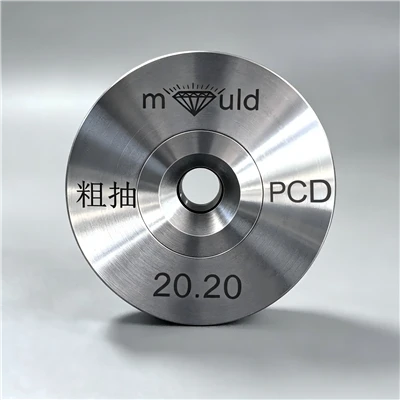
At the end of the day, carbide nail die wear is inevitable, but it’s predictable. By checking for inconsistent nail quality, pull force spikes, surface defects on the die, and entrance zone wear, you can catch issues before they derail your production. If you’re unsure if your die is worn, or if you’re looking for a reliable carbide nail die supplier to replace worn parts, reach out to discuss your production needs. We work with small nail manufacturers and large industrial operations alike, so we can tailor a die solution that fits your wire grade, production volume, and quality standards.
Wire Drawing Dies References
ASM International. (2004). Tungsten Carbides: Properties and Applications. ASM Handbook, Volume 19: Fatigue and Fracture, 217-225.
Nail Manufacturing Association. (2021). Guide to Die Maintenance and Wear Assessment. NMA Technical Bulletin Series, No. 14.
Kramer, S. (2019). Abrasive Wear in Metal Forming Dies. Journal of Manufacturing Processes, 45, 189-197.
Hejian Strains Of Hard Alloy Mould Co., Ltd.
As one of the most professional carbide nail dies manufacturers and suppliers in China, we’re featured by quality products and good service. Please rest assured to wholesale durable carbide nail dies made in China here from our factory. Also, custom service is available.
Address: Tangzhuang Industrial Park, Hejian City, Hebei Province
E-mail: limei@mouldzy.com
WebSite: https://www.mouldzy.com/
