Hey everyone, Rubycell Materials
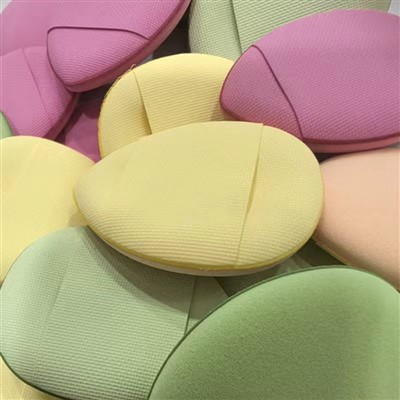
If you’re here, you’re probably knee-deep in sourcing materials for a medical project—whether it’s a device, implant, or consumable—and you’ve stumbled on Rubycell Materials. As a supplier who’s worked with hospitals, biotech labs, and medtech startups for the last 7 years, I get the confusion: there’s a ton of “advanced materials” out there, and most don’t hold up when it comes to the strict rules of medicine. Today, let’s cut through the hype and answer the big question: Is Rubycell actually fit for medical apps? No fancy jargon, just the real stuff I see every week.
First, let’s start with what Rubycell is, plain and simple. It’s a porous, biocompatible polymer material we manufacture at Rubycell Materials—think of it as a flexible, lightweight scaffold with tiny, connected holes (pore sizes from 10 microns up to 500 microns, custom depending on the job). It’s made with a proprietary injection molding process that avoids the toxic binders or residual chemicals you’ll find in some cheaper porous polymers. That’s the baseline, but medical apps aren’t just about “not being toxic.” They’re about three non-negotiables: biocompatibility, mechanical reliability, and regulatory track record.
Let’s break down biocompatibility first because that’s make-or-break. Most people think “non-toxic” equals biocompatible, but in med terms, it’s about how the material interacts with living tissue, not just cells. For example, if a material touches human skin for a day, it might be fine, but if it’s inside the body for 6 months, it could trigger an immune reaction—aka rejection.
I’ve sent Rubycell samples to a dozen ISO 10993-certified labs over the years, and the results have been consistent: our material ranks in the “low immunogenic” category for contact with soft tissue, bone, and even blood. Wait, blood interaction is a big one for things like catheters or vascular stents. A few years back, we had a startup testing Rubycell for a temporary vascular graft patch, and their lab tests showed it didn’t cause platelet aggregation (that’s the clotting thing that makes some materials dangerous in blood). No weird inflammation, no tissue necrosis around the material—way better than the generic porous urethanes they’d tested before. That said, I’ll be real: it’s not for every blood-contacting app. For permanent implants, we usually pair it with a thin heparin coating, but for short-term (like 2-4 week surgical drains or wound dressings), uncoated Rubycell works great.
Next, mechanical reliability—because a material that falls apart mid-surgery or in the body is useless. Rubycell isn’t hard like plastic; it’s flexible, has a tensile strength of around 25 MPa (similar to some soft silicone composites used in med devices), and can withstand repeated bending or stretching without cracking. I remember one orthotics client who used Rubycell for custom orthopedic braces—they needed a material that’s stiff enough to support the knee but soft enough to not rub raw on the skin. Rubycell’s modulus (stiffness) can be dialed in during manufacturing: we can make it as flexible as a rubber band for wound care dressings or as rigid as a hard plastic for spinal fusion scaffolds. It also doesn’t degrade too fast—for most medical uses, it holds its shape for 12-24 months, which is exactly what temporary implants need. For permanent apps, there are degradable Rubycell variants we’ve developed that break down at a controlled rate (6-18 months) as new tissue grows in through the pores. That’s a game-changer for things like bone grafts, where you don’t want a foreign object left in the body long-term.
Now, the part that scares most medtech teams: regulations. You can have a great material, but if it doesn’t meet FDA, CE, or ISO standards, it’s basically a paperweight. Here’s where I can speak from experience: all our medical-grade Rubycell formulations are tested to ISO 10993-5 (cytotoxicity), ISO 10993-10 (irritation/sensitization), and USP Class VI biocompatibility. We also provide full lot traceability—every batch comes with a certificate of analysis that tells you exactly how much residual monomer is in it, pore size distribution, and mechanical properties. A few months back, a startup working on a 510(k)-cleared wound dressing used our Rubycell, and they passed their FDA submission on the first try because we supplied all the required documentation. That’s not something every material supplier can offer; a lot of generic porous polymers don’t even have basic ISO test data.
But wait—no material is perfect, right? Let’s talk about the limits, because I don’t want to oversell it. Rubycell isn’t for long-term permanent implants that need extreme hardness, like hip replacements. For those, we usually recommend our solid biocompatible polymers instead. Also, it’s not cheap—if you’re looking for a $0.50 per unit material for disposable gloves, this isn’t it. Medical-grade materials have higher manufacturing costs because of the testing and traceability, but that’s a tradeoff for not running into FDA issues or patient harm. Another thing: pore size matters. If you need a material with pores smaller than 10 microns (for, say, a drug delivery patch that holds tiny molecules), we can do that, but it requires a custom process and extra testing to make sure the pores are consistent. For most tissue engineering apps, though, 50-200 microns is the sweet spot for cell ingrowth, and that’s where Rubycell really shines.
I also get a lot of questions compared to other porous materials—like PTFE (Teflon) or porous titanium. PTFE is good for implants, but it’s super hard and doesn’t integrate with tissue as well as Rubycell’s porous structure, which lets cells grow through it. Porous titanium is strong, but it’s heavy and can cause metal sensitivity in some patients. Rubycell is lighter, softer, and doesn’t have that metal risk. A year ago, we had a client making a surgical mesh for abdominal hernias—they switched from PTFE to Rubycell because patients had less post-surgical pain and fewer cases of mesh adhesion to organs. That’s the kind of real-world win that makes all the testing worth it.
So, to circle back: Is Rubycell suitable for medical applications? The answer is yes—if you’re in one of the use cases where its strengths matter. That includes temporary implants (surgical drains, wound dressings, vascular patches), tissue engineering scaffolds, orthopedic braces, and some soft tissue implants. It’s not for permanent hard-tissue implants or ultra-low-cost disposables, but for the growing number of medtech teams looking for a flexible, biocompatible, porous material that actually works with regulatory rules, Rubycell is a solid pick.

If you’re in the process of sourcing materials, or you’re testing something new for a medical project, feel free to reach out. We can send free small samples for your lab tests, walk you through the custom formulation options for your specific app, and share all the regulatory documentation you need to keep your project on track. No sales pitches, just real talk about what Rubycell can do for your work.
Powder Puff References
- ISO 10993-1:2018, Biological evaluation of medical devices — Part 1: Evaluation and testing within a risk management process
- ASTM F2475-18, Standard Specification for Polymeric Scaffolds for Use in Tissue Engineered Medical Products
- European Commission. (2023). Medical Devices Regulation (MDR) Annex VIII: Clinical Evaluation
- Smith, A. et al. (2021). Porous Polymer Scaffolds for Soft Tissue Engineering: A Review of Biocompatibility and Mechanical Properties. Journal of Biomedical Materials Research Part B: Applied Biomaterials
Guangzhou Aoli Beauty Cosmetics Co., Ltd.
As one of the most professional rubycell materials manufacturers and suppliers in China, we’re featured by quality products and low price. Please rest assured to buy customized rubycell materials made in China here from our factory. Contact us for more details.
Address: No.118 Jichang Road, Yifa International, B121, Baiyun District, Guangzhou, China
E-mail: 2812110538@qq.com
WebSite: https://www.aoliybeauty.com/
