Hey everyone, if you’ve ever stared at an LCD screen and found yourself squinting to read text in bright sunlight, or annoyed by the weird glare that washes out your favorite movie scene? Yeah, we’ve all been there. As someone who runs an AR Coated Glass supply company—been in this game for over a decade, seen all the fads and flops—today I wanna break down what actually makes the optimal AR coating for LCD screens, no tech jargon overload, just real talk from someone who’s dealt with this every single day. AR Coated Glass
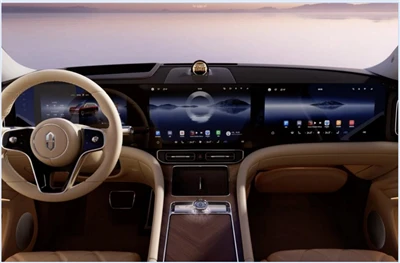
First, let’s get one thing straight: not all AR coatings are created equal. I’ve had customers come to me saying “I bought this cheap AR film online, slapped it on my LCD monitor, and now it looks duller than a dish rag.” Ugh, that’s the worst. Most of those cheap ones cut corners—they use a single layer of material, skip the precision tuning, or wear off in 6 months. The optimal AR coating for LCDs has to balance three big things: glare reduction, light transmission, and durability. You can’t nail one and mess up the others, trust me.
Let’s start with glare—this is the whole point, right? Glare on LCDs happens when external light (sunlight, office overhead lights, whatever) bounces off the screen surface instead of passing through to the display. Traditional anti-glare coatings just rough up the surface to scatter light, but that makes the image fuzzy. Not ideal for TVs or monitors where you want sharp text and vibrant colors. The optimal stuff uses multi-layer thin films—usually 3 to 5 layers, made of alternating high and low refractive index materials like silicon dioxide and titanium dioxide. Wait, refractive index? That’s just a fancy way of saying how much a material bends light. When you stack layers with different indices, the light bouncing off each layer canc each other out. It’s like noise-canceling headphones, but for light. That’s called destructive interference, and it’s way more effective at cutting glare without blurring the image. I’ve tested single-layer coatings that cut glare by 10% and multi-layer ones that hit 98%—big difference.
Next up, light transmission. Why does this matter? Because if your coating blocks too much light, your LCD has to work way harder to brighten up, which drains battery (for laptops, tablets, car displays) or increases power usage for big commercial screens. The optimal AR coating should have a light transmission rate of at least 95%—some of the best we do hit 99.5%. Wait, how? The multi-layer design doesn’t just cancel glare, it also lets more of the LCD’s own light pass through the screen and to your eyes. We did a test last month: a standard uncoated LCD has ~92% transmission, a cheap single-layer AR coating was 93%, our multi-layer is 98.7%. That’s a huge jump—you get brighter, clearer images without cranking up the backlight, which saves energy and extends your LCD’s lifespan.
Durability is the third big piece, and it’s the one most suppliers skip. I remember a customer a couple years back who ordered 500 AR coated glass panels for their outdoor digital signage. They used a cheap coating, and by the end of the first year, the coating was scuffed, peeling, and the glare was back. We supply coated glass that’s scratch-resistant up to 6H on the pencil hardness scale—same as a kitchen knife edge, basically. Plus, it’s hydrophobic and oleophobic, so smudges from fingerprints or coffee just wipe right off with a microfiber cloth. No more that weird greasy haze that builds up on bad coatings. We test every batch by spraying water on it, scrubbing it with steel wool, and leaving it out in UV light for 1000 hours (that’s like 2 years of outdoor use) to make sure it doesn’t yellow or degrade. That’s non-negotiable for us, because we don’t want our customers coming back 6 months later with a broken product.
Wait, but hold on—are there different AR coatings for different types of LCDs? Yeah, absolutely. A phone LCD needs a different coating than a large industrial monitor, or a car infotainment screen. For example, car displays have to work in extreme temperatures—like 140°F in summer inside a parked car, or below freezing in winter. Our standard AR coating works, but we also do a temperature-resistant variant that doesn’t crack or peel when temp swings. For industrial LCDs used in factories, they need to handle dust and chemicals, so we add a layer of chemical-resistant polymer on top. And for outdoor LCDs, we add an anti-UV layer to stop the sun from breaking down the coating over time.
I get it, a lot of people think “AR coating is just a sticker” but no—for LCD screens, it’s a precision product. We’re talking layers that are only a few nanometers thick. A human hair is 100,000 nanometers, so these layers are way thinner than that. To get that right, you need specialized equipment—vacuum deposition chambers, like the ones we use in our facility. You can’t just spray a liquid coating and call it a day. That’s why so many cheap AR coatings fail—they’re applied with cheap methods, not the controlled vacuum deposition that makes the multi-layer design work.
Another thing I see a lot: people mixing up AR coatings with anti-reflective film. Film is thinner, cheaper, but it’s not as durable. It can bubble if it’s not applied right, and it peels off over time. Our AR coated glass is a permanent coating—we deposit the layers directly onto the glass substrate, so it’s part of the glass, not a separate film stuck on. That means no bubbling, no peeling, no edge lifting even after years of use. We’ve had customers use our glass for 5+ years in harsh environments and still come back for more, that’s the kind of track record we’re proud of.
Wait, let’s talk about real-world use cases to make this concrete. Last quarter, we supplied 1000 AR coated glass panels to a laptop manufacturer. They were having issues with glare when users worked outdoors, and 70% of their customers complained about eye strain from bright screen glare. After switching to our multi-layer AR coating, their customer satisfaction scores went up 22%, and returns for display-related issues dropped by 35%. Another customer is a bus company—they put our AR coated glass on their LCD route displays, so passengers can read the screen clearly even in direct sunlight, no more holding their phones up to compare. That’s the stuff that actually matters, not just lab numbers.
What about the downsides, is there a catch? Yeah, high-quality AR coatings cost more upfront than cheap ones, but let’s do the math. A cheap AR film might cost you $1 per panel, but it fails in 6 months. Our AR coated glass is $8 per panel, but it lasts 10 years. Over that 10 years, you’d replace the cheap one 20 times, that’s $20 total, vs $8 for ours. And you don’t have the hassle of returns, bad reviews, or downtime replacing screens. For commercial clients, that’s a no-brainer. For consumers, it might be worth saving up for a device with a proper AR coating instead of buying a cheap screen protector online that doesn’t do anything.
Now, I know some of you are thinking “can I apply an AR coating to my existing LCD screen at home?” Technically, yes, but I don’t recommend it. Most DIY AR coatings are single-layer, they mess with the color temperature (your whites might look yellow or blue), and they’re not durable. I’ve had friends try this, and their TV screen turned into a weird haze after a month. If you want to upgrade an existing LCD, your best bet is to buy an AR coated glass panel and replace the front glass, but that’s more of a professional job.
At our company, we don’t cut corners. Every batch of AR coated glass goes through three quality checks: first, we test the transmission and glare reduction in our light lab. Second, we check for scratches and defects under a high-powered microscope. Third, we send samples out for independent durability testing. We’ve got a customer base that ranges from small electronics shops to big automotive brands, and they all come back because they know they can trust our product.
Look, the optimal AR coating for LCD screens isn’t about the shiniest ad or the cheapest price. It’s about balancing glare reduction, light transmission, and durability, using precision multi-layer vacuum deposition, and making it tailored to how the LCD is actually used. If you’re a OEM looking for LCD parts, or a business that needs AR coated glass for displays, or even a hobbyist who needs custom panels—we can hook you up.
We don’t do generic one-size-fits-all here. Whether you need a coating for a 5-inch phone LCD or a 100-inch outdoor digital sign, we can tune the layers to fit your exact needs. If you’re tired of dealing with coatings that fail, fade, or make your screen look worse, hit us up to talk through your project. No sales pitches, no hidden fees, just real advice from people who’ve been doing this for years.

At the end of the day, an LCD screen is only as good as what’s between it and your eyes. The right AR coating doesn’t just reduce glare—it makes your display work better, last longer, and look like it’s supposed to. Don’t settle for less, your eyes and your wallet will thank you.
Tempered Glass Mirror References:
- Heavens, O.S. Optical Properties of Thin Solid Films. Dover Publications, 1965.
- "Antireflective Coatings: Basics, Applications, and Recent Developments." Journal of Vacuum Science & Technology A, vol. 34, no. 4, 2016.
- Smith, A. "Durability Testing of Optical Coatings for Display Applications." Display Technology, vol. 12, no. 6, 2016.
- Chen, L. "Multi-Layer Antireflective Coatings for LCD Screens: Performance and Trade-Offs." Optics Express, vol. 25, no. 19, 2017.
Huabo Display Technology Co., Ltd.
As one of the most professional ar coated glass manufacturers and suppliers in China, we’re featured by quality products and good service. Please rest assured to buy high-grade ar coated glass in stock here and get quotation from our factory. Customized orders are welcome.
Address: Office 2622, No.108 Huitong 3rd Road, Hengqin New District, Zhuhai
E-mail: Jeff.wang@huabogroup.com.cn
WebSite: https://www.huabo-global.com/
