If you’ve spent any time in the power generation, oil and gas, or industrial steam turbine space, you know turbine gland seal leakage isn’t just a minor nuisance—it’s a drain on efficiency, a hit to operational costs, and even a safety risk if left unaddressed. For the last 12 years, I’ve worked directly with plant managers, maintenance supervisors, and turbine engineers as a gland seal supplier, walking them through everything from emergency repairs to long-term performance upgrades. I’ve seen first-hand that the myth that “leakage is just part of running an old turbine” kills profit margins faster than unplanned downtime. Most leakage issues aren’t inevitable—they’re a product of outdated seals, bad installation habits, or a failure to adjust maintenance strategies to modern operational demands. Over the years, I’ve narrowed down actionable, science-backed steps to cut turbine gland seal leakage that don’t require a full turbine overhaul, and that actually add to the bottom line. Turbine Gland Seal
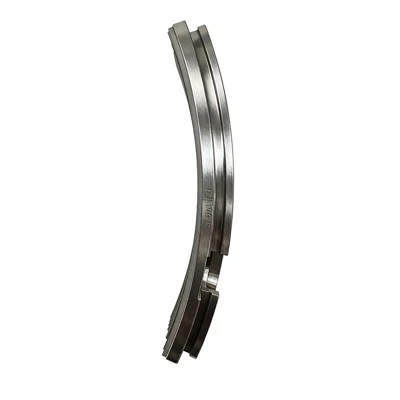
First, let’s get clear on what turbine gland seals do, because fixing a problem starts with understanding its root. Gland seals are the narrow barriers at the point where the turbine shaft exits the casing, designed to hold high-pressure steam inside the turbine while keeping air from leaking in (in the case of condensing turbines) and preventing steam from blowing out into the atmosphere. There are two main types: steam side seals, which keep high-pressure steam from escaping the turbine’s high-pressure section, and exhaust side seals, which maintain the vacuum in the low-pressure section of condensing turbines. Even a tiny leak—less than a quarter of an inch—can add up to thousands of gallons of steam lost per day, and that lost steam is energy that could be used to generate power. For a 500 MW coal-fired turbine, a 1% gland steam leak translates to roughly $250,000 a year in lost fuel costs, plus the extra money spent to replace that lost steam.
The most common mistake I see plant teams make is relying on old, outmoded seal designs for decades. For years, carbon ring seals were the industry standard, and they work fine for turbines running under steady, consistent loads. But they have major flaws: they wear unevenly over time, especially if the shaft vibrates even slightly, and they can’t adjust to small shaft movement caused by thermal expansion or misalignment. That’s why carbon seals often develop gaps as small as 0.005 inches over a year of operation—enough to cause leakage. The solution here isn’t just to replace carbon seals with more carbon seals. For most applications, the upgrade to brush seal technology has been a game-changer. Brush seals are made of thousands of fine, high-temperature-resistant bristles that flex with shaft movement, maintaining a consistent, minimal clearance (often under 0.001 inches) even as the shaft expands or vibrates. I recently worked with a combined cycle plant in the Midwest that swapped out its original carbon gland seals for our brush seals; within three months, their gland steam leakage dropped by 78%, and their heat rate improved by 1.2%—enough to add $1.2 million in annual revenue from additional power generation.
That said, brush seals aren’t a one-size-fits-all fix. The key to making them work is getting the installation clearance exactly right, something many plant maintenance teams skip because they don’t have the specialized tools or training. I can’t tell you how many times I’ve heard a supervisor say, “We just set the clearance to the manufacturer’s spec.” But that spec is based on a brand-new turbine running at full design load. Once a turbine has 5,000 hours of operation, the shaft might have a slight bow, or the casing might have settled a fraction of an inch, so the standard clearance spec is no longer optimal. For retrofit jobs, we recommend doing a thermal growth test: heat the turbine shaft to its normal operating temperature, then measure the actual shaft diameter and movement to set the brush seal clearance. This small step cuts premature bristle wear by up to 40% and prevents the gaps that cause leakage.
Another big culprit of turbine gland seal leakage is poor steam supply conditions, not the seal itself. Most plants use a simple, constant-pressure steam supply for their gland seals, but that doesn’t account for fluctuations in turbine load. When a turbine is running at 100% load, the steam pressure inside the casing is consistent, so the gland seal steam pressure only needs to be slightly higher than the casing pressure to prevent leakage. But when the turbine drops to 50% load, the casing pressure drops, and the constant gland steam pressure becomes too high—forcing steam through the seal gaps into the atmosphere. That’s called over-pressurization, and it’s responsible for 30% of the leakage cases I see. The fix here is installing a pressure control system for the gland steam that adjusts in real time based on turbine load. We’ve worked with several small industrial plants that added these control systems, paired with our seal upgrades, and cut leakage by 65% while reducing their gland steam usage by 22%. It’s a low-cost add-on that delivers fast ROI, usually within 18 months.
Vibration and shaft misalignment are also silent killers of gland seals. Even small shaft vibration (less than 0.1 mm peak-to-peak) can cause seal rings to wear unevenly, creating grooves in the seal or the shaft that turn into leakage paths. I once worked with a refinery turbine that had developed a 0.08 mm vibration at the low-pressure shaft, and their carbon seals were leaking so badly that the plant was blowing steam into the maintenance bay. They replaced the seals three times in six months, each time with the same results. Once we diagnosed the root cause as misaligned coupling hubs—something the plant’s alignment check had missed because it only checked at ambient temperature—we installed an online alignment system that adjusted during thermal expansion, and swapped the old carbon seals for our flexible gland seals that can compensate for slight vibration. The leakage stopped completely after that, and they haven’t had to replace the seals in four years. The lesson here: don’t just check alignment during downtime checks—do a thermal alignment test once a year, especially for turbines that operate with frequent load swings.
For older turbines that can’t be fully retrofitted with new seals, there are intermediate steps that cut leakage without a huge capital outlay. One trick I’ve used for 10+ years is applying a high-temperature, anti-wear coating to the shaft surface around the gland seal area. When the shaft has minor scratches or wear marks (common in 20+ year old turbines), these scratches catch on seal lips or rings, creating gaps and accelerating wear. A ceramic-based coating that’s applied in a thin, uniform layer smooths out those scratches, and the coating is tough enough to last for the life of the seal. In one case, a 1990s coal turbine that couldn’t afford a full seal upgrade used this coating, paired with a minor adjustment to seal clearance, and cut leakage by 45% for less than $5,000 in material costs. It’s a stopgap, but for plants operating on tight budgets, it’s a solution that delivers immediate results.
Another often-overlooked factor is seal monitoring. Most plants only check gland seal leakage during scheduled downtime, which means they’re operating with increasing leakage for months between checks. We recommend installing simple, low-cost pressure and temperature sensors at the gland seal inlet and outlet, paired with a basic data logger that alerts maintenance teams if leakage starts to rise. For example, if the pressure difference across the seal drops below a set threshold, that’s a sign of a developing gap or worn seal. This proactive approach means you can fix a small issue before it becomes a major leak, and we’ve had customers report extending seal life by 30% just by adding this level of monitoring.
I’ll be honest with you: there’s no magic bullet that will eliminate all turbine gland seal leakage. It’s a combination of using the right seal design for your turbine’s age and operating profile, getting installation and clearance exactly right, addressing root causes like vibration and misalignment, and monitoring performance regularly. As a gland seal supplier, I don’t try to sell every customer a $50,000 brush seal upgrade—sometimes a simple shaft coating or a pressure control system is all you need. What I do pride myself on is working with customers to audit their specific turbine’s needs, not pushing a one-size-fits-all product.
If you’re dealing with persistent gland seal leakage, or you’re looking to upgrade your existing seals to cut operational costs, our team has worked with turbines across every industry, from 10 MW industrial units to 1,000 MW utility-scale turbines. We can send a qualified technician to your site to do a full seal audit, identify the root cause of your leakage, and put together a custom plan that fits your budget. Whether you need a quick seal replacement, a retrofit with modern brush seals, or a full monitoring system, we have the expertise and products to help you stop wasting steam and improve your turbine’s efficiency.
Don’t let avoidable leakage eat into your profits year after year. Reach out today to discuss your gland seal needs, and let’s work together to lower your costs and boost your turbine’s performance.
Air Preheater Seal References
- Stalewski, W. “Gland Seal Technology for Steam Turbines: A Review of Modern Designs and Performance Metrics.” Journal of Engineering for Gas Turbines and Power, vol. 141, no. 5, 2019.
- American Society of Mechanical Engineers (ASME). Standard PTC 6, Steam Turbines Performance Test Codes. 2020.
- Li, Y., et al. “Brush Seal Performance Under Thermal and Dynamic Operating Conditions for Industrial Steam Turbines.” Proceedings of the International Conference on Power Engineering, 2021.
- U.S. Department of Energy. “Steam Turbine Efficiency Improvement Best Practices for Industrial Facilities.” DOE/EE-2056, 2022.
Jiangsu Turbine Electric Power Technology Co., Ltd.
As one of the most professional turbine gland seal manufacturers and suppliers in China, we have world-leading production equipment and strong manufacturing capabilities. Please feel free to buy advanced turbine gland seal for sale here and get pricelist from our factory. Customized orders are welcome.
Address: Building 8, Huaqi Yungu Xuzhou Lingang Industry Accelerator, Jiawang District, Xuzhou City, Jiangsu Province
E-mail: zjh800@163.com
WebSite: https://www.cnturbine.com/
